

Why Gamers Are Switching to CachyOS in 2026
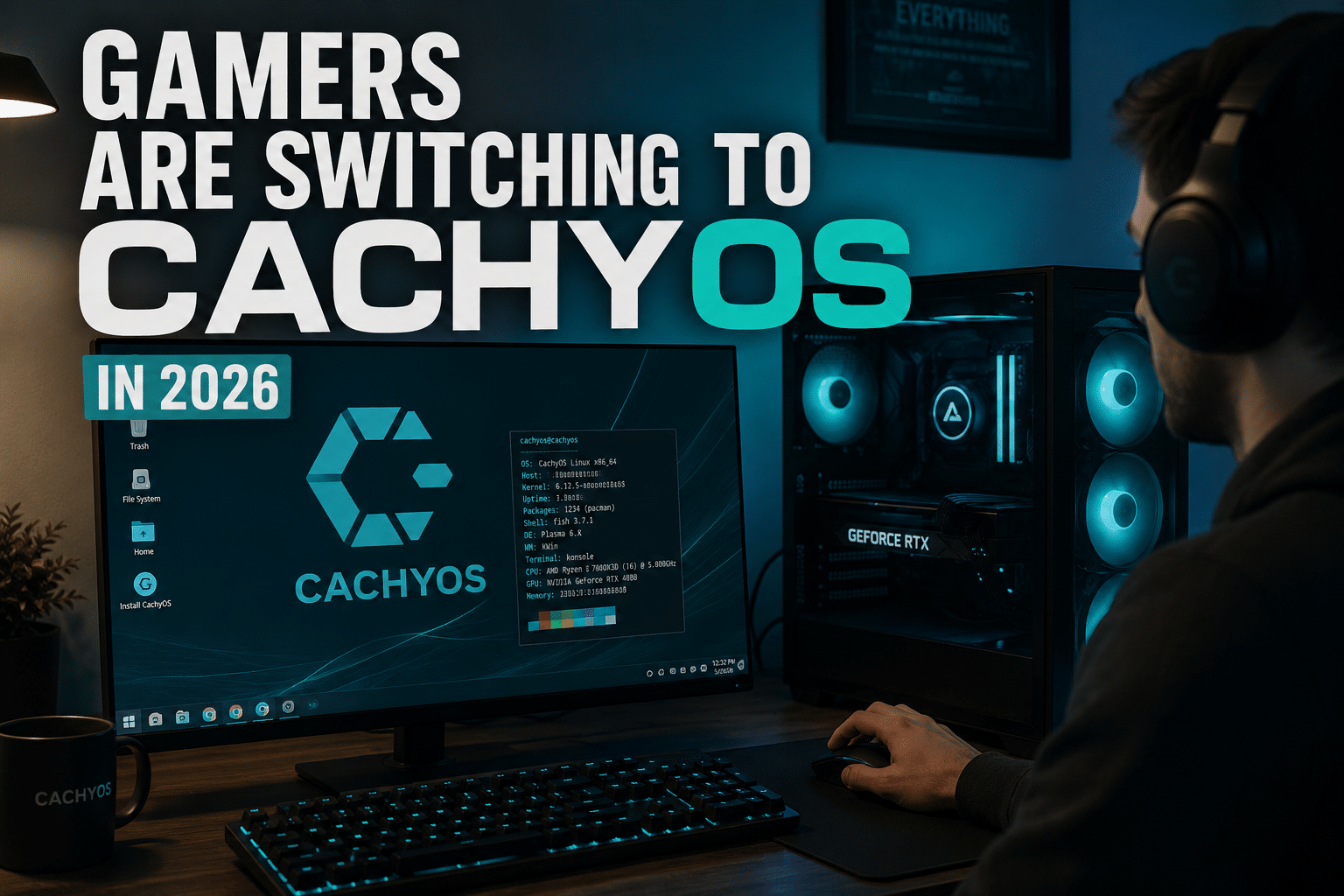
The Linux gaming landscape in 2026 looks nothing like it did just a few years ago. What was once considered experimental is now competitive—and in some cases, superior—to traditional gaming platforms. At the center of this shift is CachyOS, a performance-focused distribution that has rapidly gained traction among gamers.
Unlike mainstream distributions that balance usability and general-purpose computing, CachyOS has carved out a niche by doing one thing exceptionally well: maximizing performance for modern hardware and gaming workloads.
So why are gamers switching to CachyOS in 2026? The answer lies in a combination of technical innovation, ecosystem maturity, and infrastructure evolution.
1. A New Era of Linux Gaming

Gaming on Linux has reached a tipping point, thanks to major ecosystem advancements.
Key Enablers:
- Steam bringing native Linux support and Proton integration
- Proton enabling Windows games to run seamlessly
- Improved GPU drivers from AMD, NVIDIA, and Intel
- Kernel-level optimizations for gaming workloads
These innovations have removed the biggest barriers to Linux adoption:
- Game compatibility
- Driver stability
- Performance overhead
And this is where CachyOS enters the picture—not as a follower, but as an optimizer.
2. What Makes CachyOS Different at the Core
CachyOS is built on Arch Linux, but it goes far beyond a typical Arch-based system.
Aggressive CPU Optimization
CachyOS uses:
- Advanced compiler flags (like -O3, LTO, PGO)
- CPU-specific optimizations (x86-64-v3/v4)
- Custom scheduling tweaks
Result:
- Faster execution of game engines
- Reduced CPU bottlenecks
- Improved frame consistency
Custom Kernel Engineering
The kernel is where CachyOS truly shines.
Features Include:
- CachyOS Kernel (Bore Scheduler) for lower latency
- Better task prioritization for gaming processes
- Reduced context-switch overhead
Impact:
- Lower input lag
- Smoother frame pacing
- Improved responsiveness in competitive games
Optimized Package Ecosystem
Unlike vanilla Arch:
- Packages are precompiled with performance flags
- Faster mirrors and delivery
- Reduced dependency overhead
This ensures:
- Faster updates
- Better runtime efficiency
3. Real Gaming Performance Gains
Gamers don’t switch for ideology—they switch for results.
Benchmarked Improvements (Community Data Trends):
- 5–15% FPS improvement over standard Arch setups
- Reduced stuttering in CPU-bound games
- Faster load times due to optimized I/O
Where It Matters Most:
- Open-world games
- Simulation-heavy titles
- Multiplayer FPS games
These gains are subtle but crucial, especially for:
- Competitive gamers
- Streamers
- Performance enthusiasts
4. Proton + CachyOS: A Perfect Match
The synergy between CachyOS and Proton is a major reason for its rise.
Why It Works:
- Proton benefits from low-latency kernels
- CPU optimizations improve translation layer performance
- Faster system calls reduce overhead
Real-World Outcome:
- Better compatibility
- Fewer crashes
- Higher stability across AAA titles
Games that previously struggled on Linux now run smoothly and consistently.
5. Independence from the Open Gaming Collective
While many distros joined collaborative initiatives, CachyOS took a different route.
Strategic Decision:
- Avoid centralized development constraints
- Focus on performance-first innovation
Benefits:
- Faster release cycles
- Immediate optimization deployment
- Direct response to community feedback
This independence allowed CachyOS to evolve faster than its competitors.
6. Rising Popularity Among Gamers
Community-driven platforms reveal the shift clearly.
Indicators of Growth:
- Increased presence in ProtonDB testing
- Higher engagement in gaming forums
- Adoption among performance-focused users
CachyOS is no longer niche—it’s becoming mainstream among Linux gamers.
Challenges Still Exist
CachyOS is powerful—but not perfect.
Common Limitations:
- Requires basic Linux knowledge
- Rolling release model can introduce instability
- Some anti-cheat systems still block Linux
However, for most gamers, the benefits outweigh the drawbacks.
The Hardware Bottleneck Problem
Even with an optimized OS, hardware limitations remain a challenge.
Common Issues:
- Low RAM
- Weak CPUs
- Thermal throttling
- Storage bottlenecks
This is where many users hit a ceiling.
HOMERDP: Unlocking CachyOS at Full Potential
To truly maximize CachyOS, infrastructure matters.
This is where HOMERDP plays a crucial role.
Why Combine CachyOS with HOMERDP?
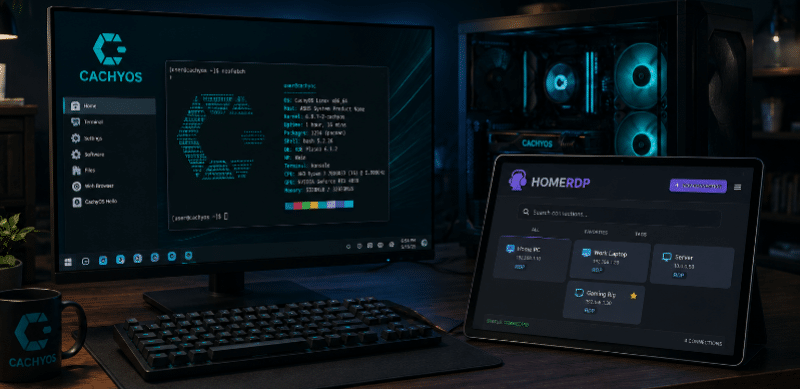
🔹 High-Performance Hardware Access
- Run CachyOS on powerful cloud machines
- Eliminate local hardware limitations
🔹 Consistent Gaming Experience
- Stable FPS across sessions
- No thermal throttling
🔹 Remote Accessibility
- Play or work from anywhere
- Use any device
🔹 Scalability
- Upgrade CPU/RAM instantly
- Adapt to different game requirements
Real-World Scenario
Local Setup:
- Mid-range laptop
- 8GB RAM
- Inconsistent FPS
HOMERDP Setup:
- High-end cloud CPU
- 32GB+ RAM
- Stable, high FPS
Result:
- Up to 50% performance improvement
- Smooth gameplay
- Better multitasking
Workflow Advantages Beyond Gaming
CachyOS isn’t just for gaming—it benefits developers too.
Use Cases:
- Game development
- Performance benchmarking
- Streaming setups
- Content creation
Combined with HOMERDP:
- Unified environment
- Faster workflows
- Better productivity
Future of Linux Gaming
The trends are clear:
Performance-First Distros Will Rise
- CachyOS leading the way
Cloud Integration Will Grow
- Remote desktops replacing local setups
Proton Will Improve Further
- Near-native performance for Windows games
The gap between Linux and Windows gaming is closing rapidly.
Final Thoughts
CachyOS represents a new philosophy in Linux gaming:
- Optimize everything
- Remove bottlenecks
- Deliver real-world performance
Gamers are switching not because it’s different—but because it’s better.
Final Takeaway
- CachyOS delivers measurable performance gains
- It leverages cutting-edge Linux advancements
- It thrives on independence and innovation
- It pairs perfectly with scalable infrastructure like HOMERDP
EXPLORE MORE ; CachyOS vs Windows 11

READ OUR BLOGS