

Rocky Linux Meets Post-Quantum Security
How Rocky Linux 10.2 Is Preparing Enterprises for the Next Generation of Cybersecurity
The cybersecurity landscape is entering a transformative era. For decades, organizations have relied on encryption algorithms that were designed to withstand attacks from conventional computers. Today, however, the rapid advancement of quantum computing is forcing businesses, governments, and technology providers to rethink the future of digital security.
While large-scale quantum computers capable of breaking modern encryption are not yet a reality, security experts agree on one critical point: organizations must begin preparing now. Data encrypted today could be intercepted, stored, and decrypted years later once quantum technology becomes powerful enough. This growing concern has accelerated the global push toward post-quantum cryptography (PQC)—a new generation of cryptographic algorithms designed to remain secure even in a quantum computing era.
Against this backdrop, Rocky Linux 10.2 arrives as one of the most important Enterprise Linux releases in recent years. Beyond routine package updates and performance improvements, the release introduces significant advancements in post-quantum cryptography support, modern development tools, container security enhancements, and remote infrastructure management capabilities.
For enterprises seeking a secure, scalable, and future-ready operating system, Rocky Linux 10.2 offers a compelling glimpse into the future of Linux infrastructure.
Why Post-Quantum Security Matters Today
Many organizations mistakenly assume that quantum computing remains a distant challenge. However, cybersecurity professionals increasingly warn against waiting until quantum computers become mainstream.
One reason is the “Harvest Now, Decrypt Later” strategy.
Cybercriminals, nation-state actors, and sophisticated threat groups can collect encrypted communications today and store them indefinitely. Once sufficiently powerful quantum computers become available, those archived communications could potentially be decrypted if they were protected using vulnerable cryptographic algorithms.
This creates a unique security problem.
Even if quantum threats are years away, data with long-term value—including financial records, intellectual property, healthcare information, government communications, legal documents, and trade secrets—requires protection now.
The National Institute of Standards and Technology (NIST) has already standardized several post-quantum cryptographic algorithms, signaling a major shift in the security industry. Technology vendors worldwide are beginning to integrate these standards into their products, operating systems, cloud platforms, and security frameworks.
Rocky Linux 10.2 reflects this industry-wide transition by introducing practical support for post-quantum technologies while maintaining compatibility with existing infrastructure.
Rocky Linux’s Growing Role in Enterprise Computing
Since the transition away from traditional CentOS, Rocky Linux has emerged as one of the most trusted Enterprise Linux distributions in the open-source ecosystem.
Organizations have adopted Rocky Linux because it delivers:
- Enterprise-grade stability
- Long-term support
- Binary compatibility with Red Hat Enterprise Linux
- Strong community governance
- Reliable update cycles
- Broad hardware support
- Cloud readiness
Today, Rocky Linux powers workloads across:
- Public cloud environments
- Hybrid cloud deployments
- Virtual private servers
- Enterprise data centers
- Research institutions
- Educational organizations
- Managed service providers
As businesses continue modernizing their infrastructure, Rocky Linux has positioned itself as a practical alternative for organizations seeking enterprise capabilities without vendor lock-in.
The release of Rocky Linux 10.2 strengthens that position considerably.
The Post-Quantum Innovations in Rocky Linux 10.2
The most notable aspect of Rocky Linux 10.2 is its expanded support for post-quantum cryptography.
Rather than waiting for widespread quantum adoption, the operating system introduces tools and frameworks that allow organizations to begin testing, evaluating, and gradually implementing quantum-resistant technologies.
Hybrid ML-KEM Support in OpenSSH
Secure Shell (SSH) remains one of the most widely used protocols for remote server administration.
System administrators, DevOps engineers, and infrastructure teams depend on SSH every day to manage Linux environments securely.
Rocky Linux 10.2 introduces support for ML-KEM hybrid key exchange mechanisms within OpenSSH.
Hybrid approaches combine traditional cryptographic methods with post-quantum algorithms, providing a balanced path toward future security while preserving compatibility with existing systems.
This strategy allows organizations to begin experimenting with post-quantum protection without completely redesigning their infrastructure.
Enhanced libssh Capabilities
The release also expands post-quantum support within libssh.
Many enterprise applications rely on libssh for secure communication and authentication. By integrating quantum-resistant cryptographic methods into the library, Rocky Linux helps developers and administrators evaluate how their applications will perform in a post-quantum environment.
Post-Quantum Certificates
Digital certificates remain a foundational component of modern cybersecurity.
From websites and APIs to enterprise authentication systems, certificates help establish trust and verify identities.
Rocky Linux 10.2 introduces support for ML-DSA certificates in directory services, enabling organizations to begin testing next-generation certificate infrastructures designed to withstand quantum attacks.
Podman and Quantum-Resistant Signatures
Container security continues to grow in importance as organizations increasingly deploy cloud-native applications.
Rocky Linux 10.2 introduces support for composite post-quantum signatures within Podman workflows.
This development strengthens software supply chain security by helping organizations verify container images using cryptographic methods designed for future threats.
As container adoption continues accelerating, these enhancements become increasingly valuable.
Security Is Becoming a Core Infrastructure Function
Historically, many organizations treated security as a separate layer added after infrastructure deployment.
Modern cybersecurity practices are changing that approach.
Today, security is becoming deeply integrated into operating systems, deployment pipelines, cloud platforms, and application architectures.
Rocky Linux 10.2 exemplifies this shift.
Instead of viewing security as an external product or add-on service, the operating system incorporates advanced cryptographic capabilities directly into its core infrastructure components.
This integration provides several benefits:
Better Risk Management
Organizations can begin evaluating future security requirements before regulatory mandates force immediate changes.
Reduced Migration Costs
Gradual adoption of post-quantum technologies is significantly less disruptive than emergency migrations later.
Improved Compliance Readiness
Many industries are already preparing for future cryptographic standards.
Organizations that begin testing today may gain a competitive advantage when new compliance frameworks emerge.
Stronger Long-Term Data Protection
Businesses handling sensitive information can start protecting data against future quantum threats before those threats materialize.
Enterprise Infrastructure Is Becoming More Distributed
Modern businesses no longer operate exclusively from centralized offices or local data centers.
Infrastructure now spans:
- Public cloud providers
- Private clouds
- Edge computing environments
- Remote workforces
- Hybrid IT architectures
- Multi-region deployments
This evolution creates new operational challenges.
Teams require secure access to systems regardless of physical location. Administrators need consistent management tools across multiple environments. Developers need reliable workspaces that support cloud-native workflows.
Rocky Linux 10.2 addresses several of these needs through enhancements to remote deployment and management capabilities.
One particularly notable addition is support for graphical installations over Remote Desktop Protocol (RDP) through new deployment mechanisms.
This capability simplifies remote provisioning and reduces dependency on physical hardware access.
For organizations managing distributed infrastructure, such improvements can significantly streamline operations.
Why Remote Infrastructure Management Matters More Than Ever
The rise of remote work, cloud adoption, and global engineering teams has fundamentally changed how organizations manage technology.
Infrastructure teams increasingly need:
- Centralized management
- Secure remote access
- Consistent development environments
- Reliable deployment workflows
- Scalable administration capabilities
Traditional workstation-centric approaches often struggle to meet these requirements.
As a result, many organizations are shifting toward remote desktop infrastructure, cloud workstations, and centralized computing environments.
How HOMERDP Supports Rocky Linux
As organizations adopt Rocky Linux for enterprise workloads, they also need practical solutions for managing increasingly complex infrastructure.
This is where HOMERDP delivers meaningful value.
HOMERDP provides remote desktop and cloud workspace solutions that align closely with the direction modern enterprise infrastructure is moving.
Centralized Administration
System administrators often manage multiple Linux servers, cloud instances, and development environments simultaneously.
HOMERDP enables centralized access to these resources from virtually any location, reducing operational complexity while maintaining productivity.
Secure Remote Access
Security remains a top priority for infrastructure teams.
By providing dedicated remote environments, organizations can reduce reliance on unmanaged endpoints and maintain better control over administrative workflows.
Development and Testing Environments
As businesses begin evaluating post-quantum technologies and modern Linux deployments, isolated testing environments become increasingly important.
HOMERDP allows teams to create flexible workspaces for:
- Application testing
- Security validation
- Container experimentation
- Infrastructure automation
- Compliance assessments
Cloud-Native Workflows
Modern DevOps practices require access to cloud platforms, Kubernetes clusters, container registries, and automation frameworks.
Remote workspaces simplify these workflows while ensuring consistent configurations across distributed teams.
As Linux infrastructure becomes more advanced, centralized remote environments can play a critical role in maintaining operational efficiency.
Container Security Continues to Evolve
Containerization has transformed enterprise software deployment.
According to industry surveys, container adoption continues growing across virtually every sector, from financial services and healthcare to retail and manufacturing.
Organizations increasingly use containers for:
- Microservices
- Web applications
- APIs
- Machine learning workloads
- Data processing pipelines
- Internal business systems
Rocky Linux 10.2 strengthens its container ecosystem through multiple Podman enhancements.
These updates include improvements to:
- Container signing
- Supply chain security
- Database migration processes
- Quadlet functionality
- Restart management policies
These capabilities help organizations build more secure and resilient application environments.
As supply chain attacks continue increasing worldwide, stronger container verification mechanisms become essential.
Modern Development Requires Modern Tools
Security alone does not define a successful enterprise operating system.
Developers also need access to current technologies.
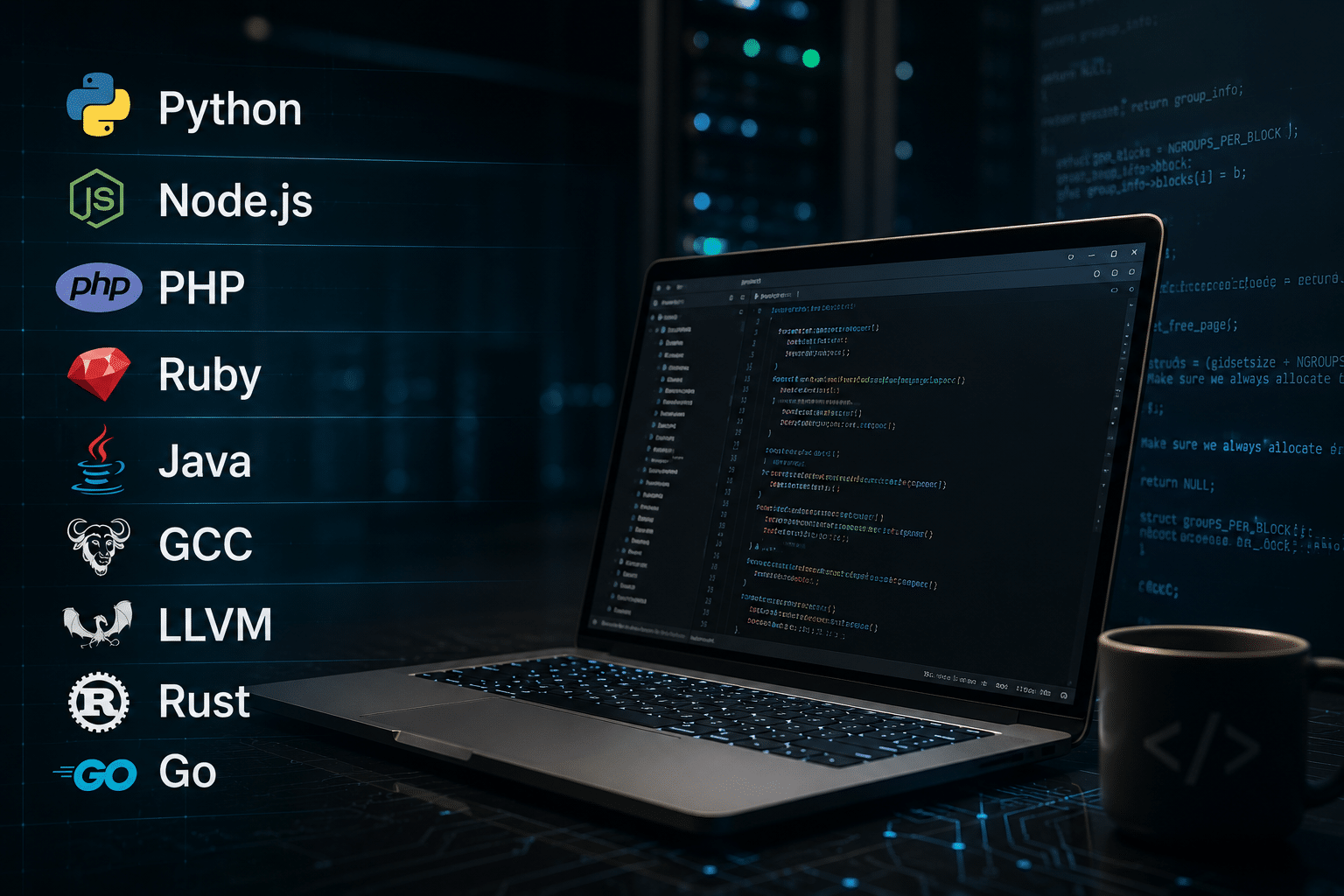
Rocky Linux 10.2 delivers substantial updates across major programming ecosystems.
Notable improvements include updated versions of:
- Python
- Node.js
- PHP
- Ruby
- Java
- GCC
- LLVM
- Rust
- Go
These updates enable development teams to leverage modern language features while benefiting from enterprise-grade stability.
For organizations building cloud-native applications, software-as-a-service platforms, automation tools, and AI-driven solutions, current development stacks are essential.
Outdated tools often increase technical debt and hinder innovation.
Rocky Linux 10.2 helps organizations avoid those challenges.
The Shift Toward Image-Based Infrastructure
Another major trend reflected in Rocky Linux 10.2 is the growing importance of image-based deployments.
Traditional server administration often involved manual configuration and maintenance.
Modern infrastructure increasingly relies on:
- Infrastructure as Code
- Immutable systems
- Automated provisioning
- Reusable deployment templates
- Containerized workloads
Rocky Linux 10.2 introduces enhancements that support these approaches.
Benefits include:
Faster Deployments
Preconfigured images can dramatically reduce provisioning times.
Consistency
Standardized images eliminate many configuration-related issues.
Simplified Recovery
Organizations can restore systems more quickly during incidents.
Improved Scalability
Automated deployments support rapid infrastructure growth.
As enterprises continue adopting cloud-native strategies, image-based infrastructure will become increasingly important.
Preparing for the Quantum Era
While quantum computing remains an emerging technology, the transition toward post-quantum security has already begun.
Leading technology companies, governments, standards organizations, and security vendors are investing heavily in quantum-resistant solutions.
Organizations that begin preparing now gain several advantages:
- Reduced future migration risks
- Better understanding of compatibility requirements
- Stronger long-term data protection
- Improved regulatory readiness
- Enhanced security planning
Rocky Linux 10.2 provides an accessible platform for exploring these technologies without abandoning existing infrastructure investments.
By integrating post-quantum capabilities alongside proven enterprise technologies, the operating system offers a practical roadmap toward future security.
Final Thoughts
Rocky Linux 10.2 represents far more than a routine operating system update.
It signals a broader transformation occurring across enterprise computing.
Security is becoming infrastructure. Cryptography is evolving. Remote operations are becoming standard. Containers are dominating application deployment. Cloud-native workflows are reshaping development and operations.
At the center of these trends lies a simple reality: organizations must prepare for tomorrow’s challenges while continuing to support today’s business requirements.
Rocky Linux 10.2 successfully balances both objectives.
Its post-quantum cryptography enhancements demonstrate forward-thinking security leadership. Its container improvements strengthen modern application delivery. Its updated development tools support innovation. Its deployment enhancements simplify infrastructure management.
Combined with remote workspace solutions such as HOMERDP, organizations can build secure, scalable, and future-ready Linux environments capable of supporting the next decade of digital transformation.
The quantum era may still be emerging, but the preparation has already begun—and Rocky Linux 10.2 is helping enterprises take one of their first meaningful steps forward.
EXPLORE MORE ; How Nitrux 6.1 Is Redefining Linux Workstations
READ OUR BLOGS