

Xeon CPUs Are the Home-Lab Secret
Home labs have exploded in popularity—thanks to DevOps learners, sysadmins, developers, self-hosters, and even students exploring virtualization and containerization. And one trend dominates every forum and enthusiast group:
The rise of used Intel Xeon CPUs as the ultimate budget powerhouse.
People love the idea of buying a once-expensive enterprise CPU for the price of a smartphone cover and building a home lab with massive multi-core performance. In many cases, this idea is true—used Xeons offer tremendous value.
A major question arises:
Is a used-Xeon home lab still the smartest choice? Or is a remote server/RDP solution like HOMERDP a superior alternative?
This article breaks down:
- Why used Xeons became a “home-lab secret”
- The real performance you get
- The hidden downsides experts rarely discuss
- When a home lab makes sense
- When a cloud-based RDP/VPS from HOMERDP is a far better decision
Let’s dive in.
Why Used Xeon CPUs Became the King of Budget Home Labs
Home lab builders discovered that enterprise hardware—after a few years—drops in price dramatically. For example:
- A Xeon E5-2680 v4, originally costing $1,174 at launch, now sells for under $35 on many used markets.
- CPUs with 12–16 cores and 24–32 threads are almost free compared to consumer Ryzen/i7 processors.
- Server-grade hardware supports features like ECC memory, quad-channel RAM, and virtualization instructions that make it perfect for lab infrastructure.
What Makes Used Xeons Attractive?
1. High Core Counts at Low Prices
You get 8, 10, 12, or 16 cores for a fraction of the cost of modern CPUs. Perfect for:
- Docker containers
- Proxmox
- Kubernetes clusters
- Virtual machines
- Self-hosting applications
- CI/CD runners
2. ECC Memory Support
Error-correcting RAM increases system stability—great for always-on servers.
3. Server-Grade Reliability
These CPUs were built for data centers and 24/7 workloads.
4. Incredible Price-to-Performance Ratio
For parallel workloads, a used Xeon still performs shockingly well.
This explains the hype. But it’s only half the story.
The Downsides: What Most People Don’t Realize Before Building a Home Lab
Used Xeon builds are powerful… but they come with major drawbacks that beginners often overlook.
1. Power Consumption (The Silent Cost Trap)
Most Xeon CPUs from the E5-v3 and E5-v4 generations consume 85W–140W idle and even more under load.
A home lab running 24/7 costs:
- ₹1,500–₹3,000 per month (India)
- $10–$30 per month (US)
- €15–€40 per month (EU)
Suddenly, the “cheap home lab” is no longer cheap.
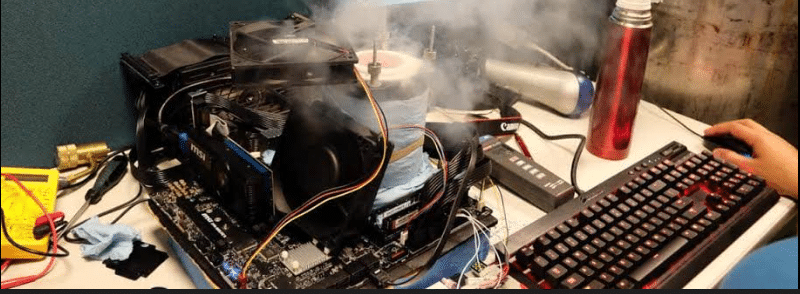
2. Heat, Noise & Space Requirements
- Server motherboards are big.
- Rack units sound like jet engines.
- Xeon machines get hot and require high airflow.
Not ideal if you live in:
- A small room
- A shared apartment
- A rented space
3. Older Architecture Limitations
Most used Xeons lack modern features:
- No PCIe 4.0/5.0
- Slower NVMe support
- Low single-core performance
- No DDR5
- Older chipsets
For workloads requiring fast per-core speed (game servers, automation scripts, emulators), they fall behind.
4. Hardware Failure Risks
Used server hardware comes from data centers where they ran 24/7 for 4–7 years.
That means:
- Old capacitors
- Worn-out fans
- Deteriorating thermal paste
- Unknown usage history
This leads many users to frustrations like:
- Random shutdowns
- Fan failures
- Dead motherboards
- Storage controller issues
5. Setup & Maintenance Overhead
A home lab requires:
- BIOS tuning
- LSI/RAID controller flashing
- Cooling setup
- Wiring
- Networking
- Storage configuration
- OS installation
- Backup planning
- Periodic maintenance
For beginners, it can be overwhelming.
Why Many Are Ditching Home Labs for Remote RDP/VPS Servers
With rising electricity costs, hardware shortages, and maintenance challenges, more developers and home-lab enthusiasts are turning to remote server solutions.
And this is where HOMERDP becomes a strong alternative.
Unlike AWS or Azure (which are expensive), HOMERDP offers powerful servers at predictable and affordable monthly pricing—with zero hardware headaches.
Why HOMERDP Is Becoming the New “Home Lab Secret”
HOMERDP gives users all the advantages of a home lab, minus the downsides.
Here’s why more people are switching:
1. High-Performance CPU Power Without Buying Hardware
HOMERDP provides powerful RDP and VPS plans featuring:
- High-clock CPUs
- Multi-core performance
- NVMe SSD storage
- Generous RAM allocations
You get more speed than most used-Xeon builds—and with modern architecture.
2. Zero Electricity, Zero Noise, Zero Maintenance
Home lab headaches disappear.
With HOMERDP:
- No power bills
- No fans
- No heat
- No hardware failures
- No constant tweaking
Your remote server simply works.
3. Full Admin Access: Just Like a Home Lab
Unlike shared hosting, HOMERDP gives:
- Full root/admin access
- Ability to install any OS or software
- Container and VM support
- Custom configuration freedom
You can run:
- Proxmox-like VM setups
- Docker environments
- Game servers
- Dev/automation workloads
- Development tools
All exactly the way you want.
4. Global Datacenter Locations for Low Latency
HOMERDP provides servers in multiple regions, allowing you to choose the closest location for:
- Lower ping
- Faster data transfers
- Smooth remote desktop experience
- Better gaming/server performance
For Indian users, having Indian and nearby-region servers means excellent latency.
5. Predictable, Affordable Monthly Pricing
Unlike electricity-hungry home labs, HOMERDP charges a simple fixed monthly fee.
This makes budgeting easier and long-term hosting more affordable.
6. Instant Deployment—No Waiting for Components
A home lab requires days or weeks to build, depending on:
- Part availability
- Shipping
- Compatibility issues
HOMERDP activates your server instantly after purchase.
You get a ready-to-use machine within minutes.
Home Lab vs. HOMERDP: Which One Should You Choose?
Choose a Used-Xeon Home Lab If:
- You love tinkering with hardware
- You want to learn physical networking/infrastructure
- You need ECC RAM for experimentation
- You enjoy building servers from scratch
Choose HOMERDP If:
- You want instant performance
- You prioritize convenience
- You don’t want high electricity bills
- You need globally accessible servers
- You want reliability and zero hardware risk
- You want a scalable environment for real projects
Final Verdict: The Home Lab Secret Has Evolved
Used Xeon CPUs were the home-lab secret nobody talked about—but in 2025, the smarter “secret” is this:
You don’t need to build a home lab to enjoy its benefits.
With HOMERDP, you get:
- Enterprise-grade performance
- Reliable uptime
- Full control
- Modern hardware
- Zero maintenance
- Affordable monthly pricing
The power of a home lab—without the complications.
For developers, engineers, students, and businesses, HOMERDP offers a cleaner, more scalable future.
EXPLORE MORE; Why Every Home Lab Needs a Cheap VPS
READ OUR BLOGS