

Zig Meets Remote Power
Modern software development is evolving rapidly. Developers are no longer confined to local machines or limited hardware. High-performance programming languages demand equally powerful infrastructure — and that’s where remote desktop services come in.
One language that perfectly illustrates this shift is Zig, a modern systems programming language designed for performance, safety, and control. When paired with professional-grade remote desktop infrastructure like HOMERDP, developers unlock a scalable, efficient, and future-ready development workflow.
In this article, we explore how Zig’s philosophy aligns with remote computing, why RDP environments are ideal for systems development, and how HOMERDP’s high-performance infrastructure empowers developers to build faster and smarter.
The Rise of Zig in Modern Systems Programming
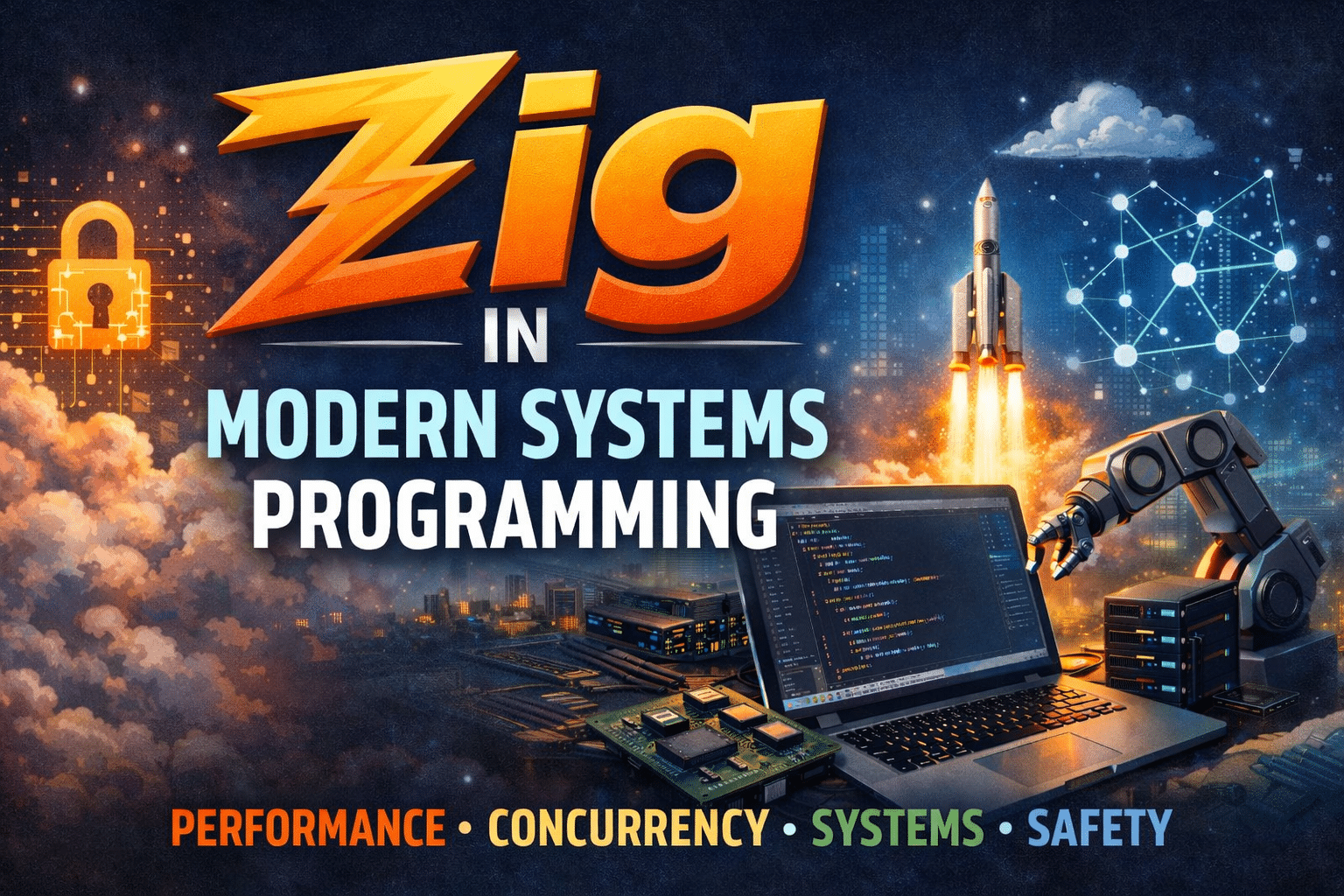
Zig has gained serious attention in the systems programming world because it addresses many of the frustrations developers experience with traditional languages like C and C++. It emphasizes:
- Manual memory management without hidden allocations
- Compile-time code execution (comptime)
- Cross-compilation as a first-class feature
- Predictable performance
- No hidden control flow
Unlike heavier frameworks, Zig focuses on clarity and control. It avoids magical abstractions and instead gives developers direct insight into what their code is doing.
But here’s the challenge: high-performance compilation and cross-platform builds can demand serious computational resources.
Large Zig projects that:
- Target multiple architectures
- Use heavy compile-time evaluation
- Generate optimized release builds
- Run extensive test suites
can significantly stress local hardware — especially if you’re working on a standard laptop.
This is where remote desktop infrastructure changes the game.
Why RDP Services Matter for Zig Developers
Remote Desktop Protocol (RDP) allows developers to access a powerful remote machine as if they were sitting in front of it physically. Instead of upgrading your personal device, you can:
- Offload compilation tasks
- Run builds on enterprise-grade CPUs
- Access high-memory environments
- Test across operating systems
- Maintain consistent dev environments
For Zig developers, this is particularly valuable because Zig’s compiler is fast — but serious projects with cross-target builds and optimization flags still benefit from additional compute power.
Instead of being limited by 8GB or 16GB RAM locally, you can build on 32GB, 64GB, or even 128GB remote systems without touching your personal device.

How HOMERDP Enhances Zig Development
HOMERDP provides high-performance remote desktop solutions that are particularly well-suited for developers working with system-level languages.
Here’s how it integrates seamlessly into a Zig workflow:
High-Performance CPU Infrastructure for Fast Compilation
Zig emphasizes predictable, optimized output. When building in release-fast or release-safe modes, compilation can become compute-intensive.
With HOMERDP’s powerful server-grade CPUs:
- Large projects compile significantly faster
- Multi-target builds run in parallel
- CI-style workflows can be simulated locally
- Benchmarking environments remain stable
Instead of waiting minutes on a laptop, developers can iterate quickly — a major productivity boost.

Scalable RAM for Comptime-Heavy Projects
Zig’s compile-time execution (comptime) is incredibly powerful. It enables advanced metaprogramming and dynamic code generation during compilation.
However, complex comptime logic can consume memory. On limited systems, this may slow down builds or create bottlenecks.
HOMERDP’s scalable RAM configurations ensure:
- Smooth handling of heavy compile-time logic
- Stable large test suites
- Efficient memory profiling
- Better performance debugging
This is particularly useful for systems engineers building low-level libraries, networking tools, or performance-critical software.
Cross-Platform Build Testing
Zig makes cross-compilation easy. You can build for:
- Windows
- Linux
- Embedded architectures
- Different CPU instruction sets
But real-world testing still benefits from running code in native environments.
Using HOMERDP, developers can:
- Maintain a Windows RDP instance for Windows builds
- Maintain a Linux server instance for server deployment testing
- Create multiple OS-based environments
- Simulate production environments
This eliminates “it works on my machine” issues and ensures production-level reliability.
Centralized Development for Teams
Zig is increasingly used in collaborative projects. Remote infrastructure simplifies team workflows by offering:
- Unified build environments
- Shared debugging sessions
- Centralized dependency management
- Version-controlled development machines
With HOMERDP, organizations can create standardized development images. Every team member works in the same environment, eliminating configuration inconsistencies.
For startups building performance-driven applications, this consistency dramatically reduces onboarding time.
Secure Remote Development
Security matters — especially for companies building proprietary systems tools, fintech applications, or embedded firmware.
HOMERDP enhances Zig development security by:
- Isolating development from local devices
- Enabling controlled remote access
- Providing firewall and access management
- Supporting encrypted remote connections
If a local device fails, your development environment remains intact in the cloud.
Practical Zig + HOMERDP Workflow
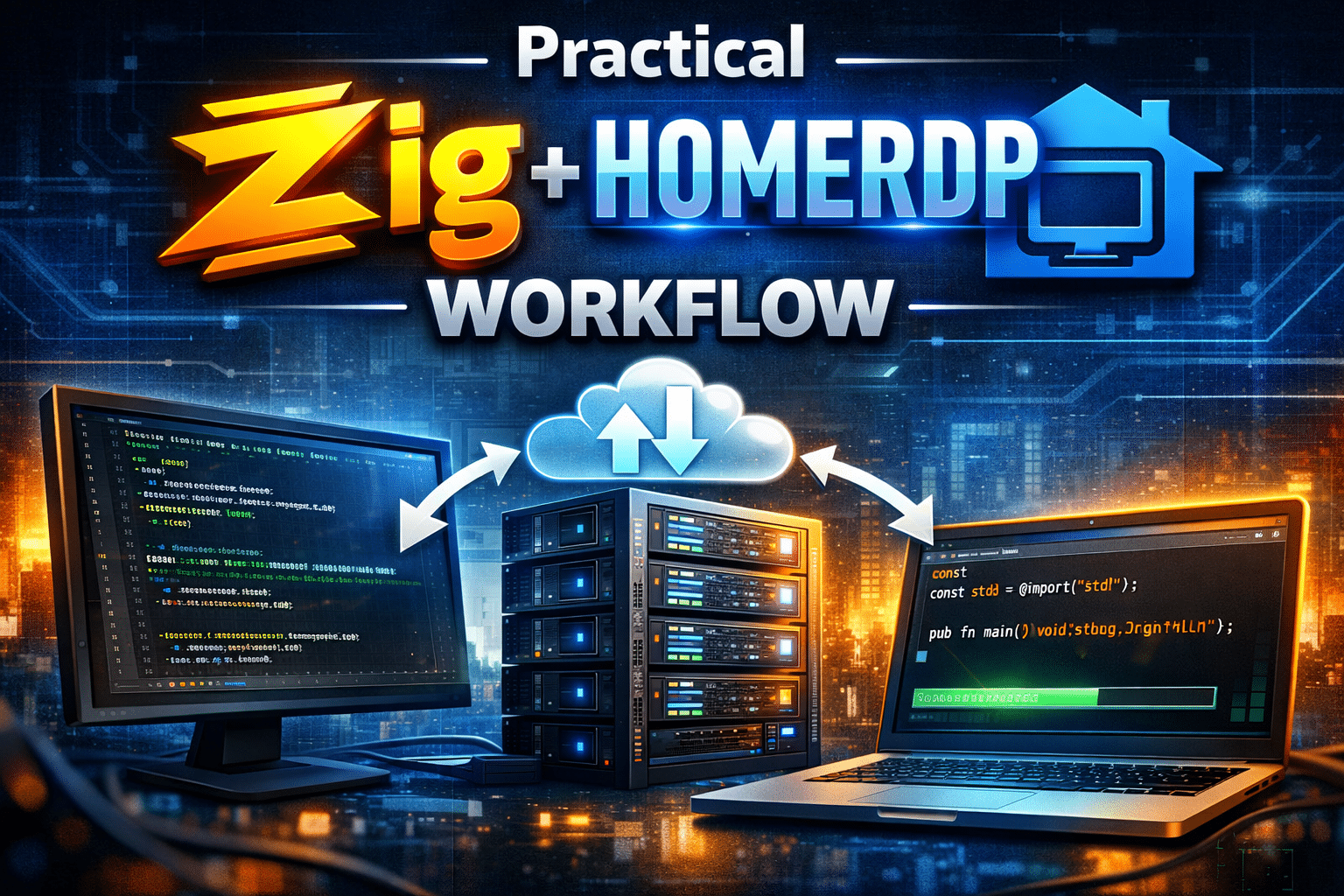
Let’s walk through how a developer might structure their workflow.
Step 1: Provision Remote Desktop
Choose a high-performance configuration based on your needs:
- Heavy compilation? Choose higher CPU cores.
- Large builds and tests? Increase RAM.
- Storage-heavy projects? Add NVMe-backed storage.
Step 2: Install Zig and Tooling
Inside your HOMERDP environment:
- Install Zig
- Configure your preferred editor (VS Code, Neovim, etc.)
- Set up Git repositories
- Install debugging tools
Because the system runs on powerful remote hardware, everything responds smoothly.
Step 3: Optimize Build Cycles
Use remote computing power to:
- Run full optimization builds
- Benchmark performance
- Test multiple architectures
- Profile memory usage
Meanwhile, your local device remains cool and responsive.
Step 4: Deployment Simulation
Zig is often used for backend utilities and high-performance network tools. Using a Linux-based RDP instance, you can simulate production server environments directly.
This reduces surprises during deployment.
Real-World Use Cases
🔹 Systems Utilities Development
Develop CLI tools, file systems utilities, or networking services in Zig and compile them rapidly on remote infrastructure.
🔹 Embedded Systems Programming
Cross-compile firmware while using powerful remote CPU resources for build pipelines.
🔹 High-Performance APIs
Build low-latency APIs in Zig and benchmark them under production-like server conditions.
🔹 Educational & Training Environments
Institutions teaching modern systems programming can provide students with ready-to-use RDP desktops instead of forcing local installations.
Cost Efficiency Compared to Local Hardware
Upgrading local hardware repeatedly can be expensive:
- New laptop for faster CPU
- More RAM upgrades
- Storage expansions
- Maintenance and repair
Instead, HOMERDP offers scalable infrastructure. You can upgrade your server plan instantly without purchasing new physical hardware.
For freelancers, startups, and content-driven developers, this flexibility improves ROI.
Why Zig Developers Should Consider Remote Infrastructure Now

The tech industry is shifting toward cloud-native workflows. Even individual developers now benefit from remote environments because:
- Hardware costs are rising
- Cross-platform testing is essential
- CI/CD pipelines demand consistency
- Performance expectations are higher than ever
Zig’s philosophy — control, predictability, performance — aligns perfectly with powerful remote desktop environments.
When you remove local hardware bottlenecks, you allow Zig to operate at its full potential.
The Strategic Advantage
Combining Zig with HOMERDP provides:
✔ Faster compile times
✔ Reliable cross-platform builds
✔ Secure development environments
✔ Centralized team collaboration
✔ Scalable infrastructure
✔ Reduced hardware dependency
Instead of thinking small — limited by your laptop — you think at server scale.
Final Thoughts
Zig represents the future of efficient, no-nonsense systems programming. It gives developers unmatched control and clarity. But to fully leverage its capabilities, especially in large-scale or cross-platform projects, robust computing infrastructure is essential.
HOMERDP bridges that gap by delivering high-performance, scalable remote desktop environments tailored for demanding development workflows.
For developers serious about performance engineering, embedded systems, backend tooling, or low-level optimization, combining Zig with a powerful RDP environment is not just convenient — it’s strategic.
When modern programming meets modern infrastructure, productivity accelerates.
And that’s exactly what Zig + HOMERDP delivers.
EXPLORE MORE ; Why LXC & Docker Outperform Traditional VMs on HOMERDP

READ OUR BLOGS