

Why Proton Drive’s Linux Launch Matters More Than You Think
For years, Linux users have lived with a strange contradiction.
Linux powers the majority of the world’s servers, cloud infrastructure, supercomputers, and developer environments. It runs the backbone of modern computing, from Kubernetes clusters and AI workloads to financial systems and edge devices. Yet many mainstream productivity tools have historically treated Linux as a secondary platform.
That disconnect has slowly been disappearing.
Major software vendors now recognize Linux as a serious desktop operating system for developers, engineers, enterprises, and privacy-conscious users. Microsoft brought Visual Studio Code to Linux. JetBrains supports Linux extensively. Slack, Discord, Docker, GitHub Desktop, and countless developer tools now offer first-class Linux experiences.
Yet one major gap remained in the privacy-focused productivity ecosystem: Proton Drive.
That gap has finally closed.
Proton’s decision to launch an official Linux client for Proton Drive represents far more than another desktop application release. It signals the maturation of Linux as a productivity platform, validates years of community demand, and strengthens the growing movement toward privacy-first cloud computing.
The significance extends beyond individual users. It affects developers, remote teams, enterprises, cloud workstation providers, and organizations seeking alternatives to traditional Big Tech ecosystems.
The Linux launch matters far more than many people realize.
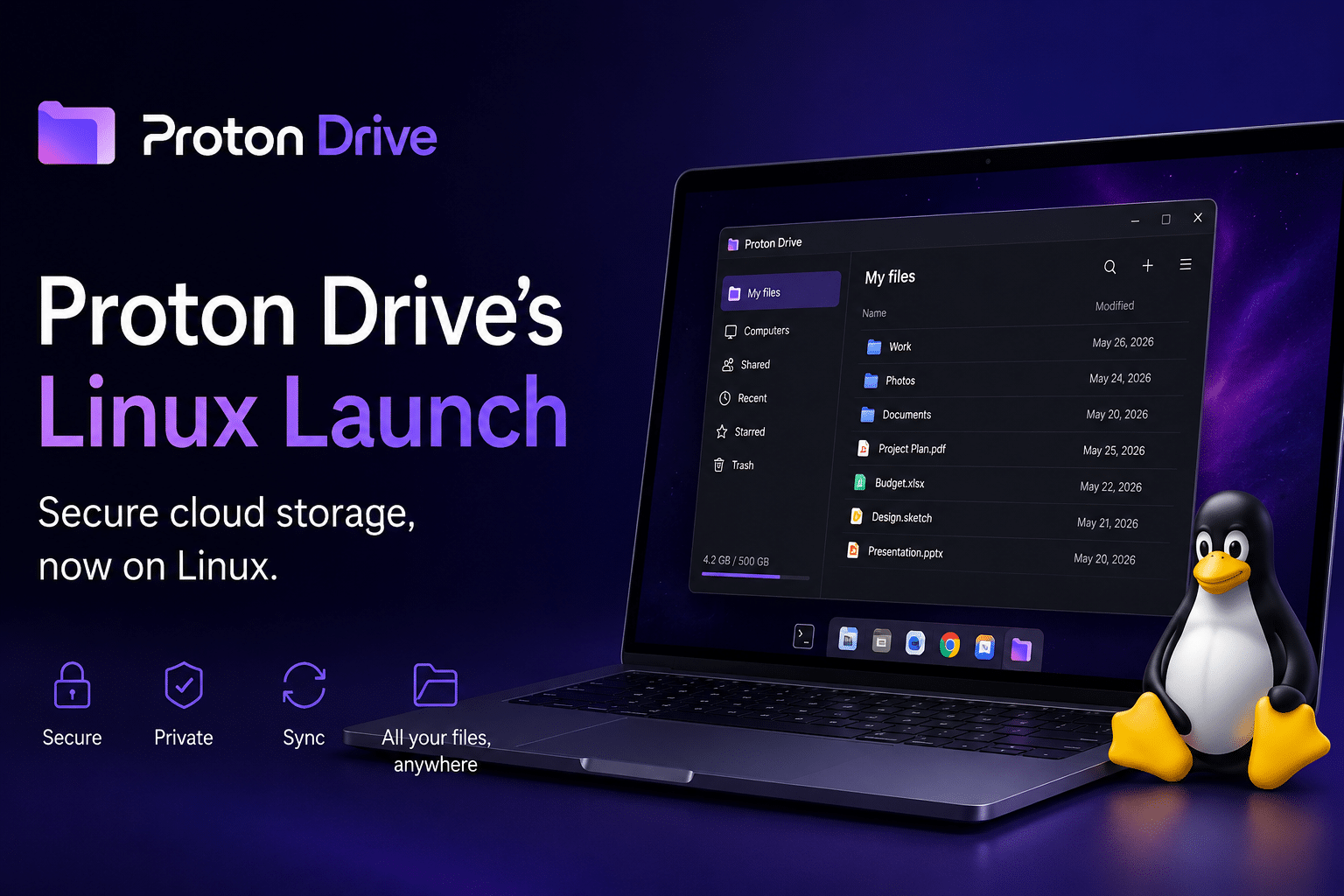
The Evolution of Proton
To understand the importance of Proton Drive on Linux, it helps to understand Proton’s broader mission.
Proton started as a secure email provider founded by scientists and engineers who wanted to create a privacy-focused alternative to conventional communication platforms.
Over time, Proton expanded into a complete ecosystem that includes:
- Proton Mail
- Proton VPN
- Proton Calendar
- Proton Pass
- Proton Drive
Together, these services aim to provide a privacy-centric alternative to ecosystems dominated by Google, Microsoft, Apple, and other large technology companies.
Unlike many cloud providers, Proton emphasizes:
- End-to-end encryption
- Open-source development
- Transparency
- User privacy
- Data sovereignty
This philosophy has attracted millions of users globally, particularly among security professionals, developers, journalists, researchers, and businesses concerned about data protection.
However, one challenge consistently appeared in discussions across the Linux community.
Linux users wanted a native Proton Drive experience.
Proton Drive users on Linux
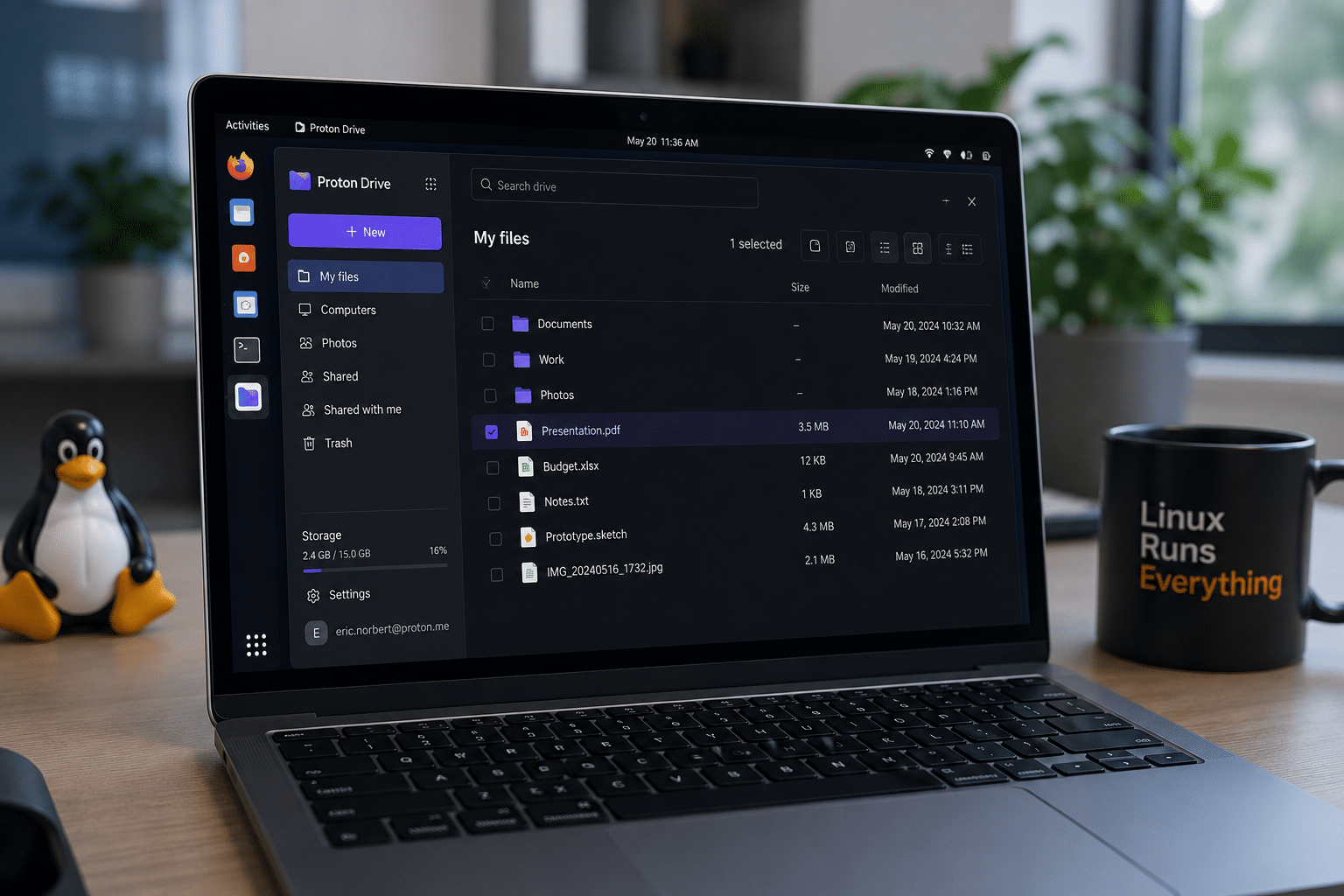
Before the Linux client arrived, Proton Drive users on Linux faced limitations that Windows and macOS users largely avoided.
Many users relied on:
- Browser-based access
- Command-line tools
- Community-developed synchronization solutions
- Manual uploads and downloads
While these approaches worked, they created friction.
Developers often expect file synchronization to happen automatically.
Remote teams expect seamless access to shared files.
Businesses want simple deployment and management.
Without native synchronization, Linux users had to adopt workarounds that complicated otherwise streamlined workflows.
This wasn’t merely an inconvenience.
It represented one of the last major barriers preventing some organizations from fully embracing privacy-first cloud productivity on Linux.
Why Native Linux Support Is Important
The significance of native support goes beyond convenience.
Several key advantages emerge when software vendors provide official Linux clients.
Reliability
Official clients receive vendor testing, support, and ongoing maintenance.
Organizations can trust the software stack instead of relying on community-maintained solutions.
Security
Security updates arrive through official channels.
Users receive patches faster and reduce dependency on third-party tools.
Performance
Native applications can optimize synchronization behavior, caching, bandwidth management, and resource usage.
Enterprise Adoption
Businesses often require officially supported software before deployment.
The availability of an official Linux client removes a major obstacle for enterprise adoption.
Linux Is No Longer a Niche Platform
Some people still view Linux as a hobbyist operating system.
That perception is increasingly outdated.
Linux dominates several critical technology sectors.
Cloud Computing
Most cloud workloads worldwide run on Linux-based operating systems.
Amazon Web Services, Google Cloud Platform, and Microsoft Azure rely heavily on Linux infrastructure.
Artificial Intelligence
The majority of machine learning frameworks and AI deployment environments operate on Linux.
Organizations training large language models, computer vision systems, and recommendation engines frequently use Linux-based infrastructure.
Containerization
Docker and Kubernetes transformed software deployment.
Both technologies rely heavily on Linux.
Edge Computing
Edge devices, IoT systems, and embedded platforms frequently use Linux distributions.
Software Development
Many developers choose Linux because of its flexibility, performance, and extensive tooling ecosystem.
As Linux expands across these domains, demand for desktop productivity applications continues growing.
Proton recognized that reality.
The Rise of Privacy-First Computing
Another reason this launch matters is the broader shift toward privacy-focused technology.
For years, consumers accepted cloud services that collected large amounts of personal information.
Today, attitudes are changing.
Organizations increasingly prioritize:
- Data protection
- Regulatory compliance
- Encryption
- User control
- Vendor independence
Several factors contribute to this shift.
Regulatory Pressure
Governments worldwide continue introducing stricter privacy regulations.
Companies face increasing responsibilities regarding data handling and storage.
Security Threats
Cyberattacks continue increasing in frequency and sophistication.
Organizations seek stronger protections for sensitive data.
Customer Expectations
Users now pay closer attention to privacy policies and data practices.
Trust has become a competitive advantage.
Proton sits directly at the intersection of these trends.
By bringing Proton Drive to Linux, the company strengthens its position as a leading provider of privacy-first cloud services.
Why Developers Should Care
Developers represent one of the most important user groups affected by this launch.
Modern software development generates large volumes of files:
- Source code repositories
- Documentation
- Build artifacts
- Infrastructure configurations
- Design assets
- Security reports
Managing these assets efficiently is critical.
Developers often work across multiple devices and environments.
A native Linux synchronization client simplifies workflow management.
Files remain synchronized automatically.
Version-controlled projects coexist with secure cloud storage.
Teams spend less time managing files and more time building products.
For developers already committed to Proton’s ecosystem, Linux support removes a major pain point.
Remote Work Changed Everything: Proton Drive’s Linux
The global shift toward remote and hybrid work transformed how organizations operate.
Employees now expect access to files from anywhere.
Teams collaborate across multiple countries and time zones.
Traditional desktop-centric workflows no longer fit modern requirements.
Cloud storage became essential infrastructure.
However, many organizations remain uncomfortable with placing sensitive information inside ecosystems built around extensive data collection.
Privacy-focused alternatives gained momentum as a result.
Proton Drive’s Linux client strengthens that momentum.
Remote teams using Linux now gain access to a secure, integrated file synchronization experience without sacrificing privacy principles.
Cloud Workstations Are Becoming the New Normal
An equally important trend is the rise of cloud-hosted desktop environments.
Organizations increasingly provision virtual desktops instead of purchasing increasingly expensive hardware for every employee.
This shift creates new opportunities.
Cloud workstations offer:
- Centralized management
- Improved security
- Hardware independence
- Faster onboarding
- Easier scaling
This is where HOMERDP becomes highly relevant.
How HOMERDP Complements Proton Drive
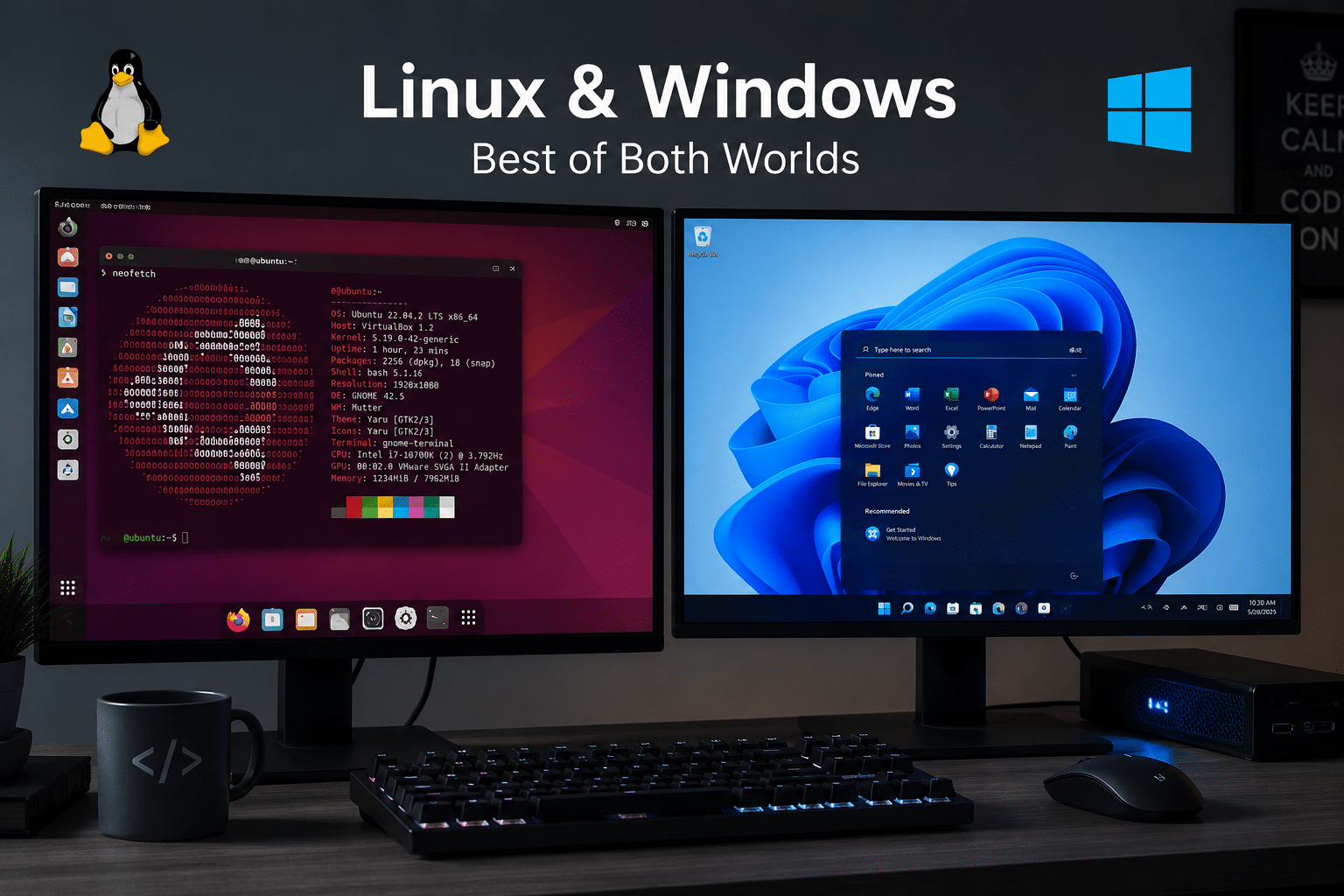
As organizations modernize their infrastructure, they often combine cloud storage with cloud workstations.
HOMERDP provides virtual Linux and Windows desktop environments that users can access securely from anywhere.
When paired with Proton Drive, organizations gain a powerful productivity stack.
Secure File Synchronization
Proton Drive protects files with encryption and synchronization capabilities.
Cloud-Based Computing
HOMERDP delivers high-performance Linux workstations without requiring local hardware upgrades.
Anywhere Access
Employees can connect to their cloud desktop, access synchronized Proton Drive files, and continue working seamlessly.
Simplified IT Management
Instead of maintaining dozens or hundreds of physical devices, IT teams manage centralized cloud environments.
This combination becomes particularly attractive for:
- Development teams
- DevOps engineers
- Cybersecurity professionals
- Startups
- Remote organizations
- Managed service providers
The result is a modern, privacy-conscious workspace architecture.
The Enterprise Implications
Enterprise adoption often depends on seemingly small details.
A missing Linux client can become a deployment blocker.
An unsupported workflow can delay migration projects.
An absent synchronization tool can force organizations to remain dependent on legacy solutions.
By supporting Linux directly, Proton removes a common objection.
Organizations evaluating privacy-focused productivity platforms now gain:
- Better platform consistency
- Easier deployment
- Reduced support complexity
- Improved user experience
These advantages matter significantly at scale.
What appears to be a simple software release may influence future infrastructure decisions across entire organizations.
Competition Is Intensifying
The cloud storage market remains highly competitive.
Major players include:
- Google Drive
- Microsoft OneDrive
- Dropbox
- Box
- iCloud Drive
Each platform offers strengths and weaknesses.
Proton differentiates itself primarily through privacy and encryption.
Linux support strengthens that differentiation.
Organizations that prioritize security often employ Linux extensively.
By aligning its product strategy with Linux adoption trends, Proton positions itself more effectively against larger competitors.
The Signal to the Industry
The Linux release sends a broader message to the technology industry.
That message is simple:
Linux users matter.
Historically, many software companies delayed Linux support because they perceived the user base as too small.
That argument becomes harder to justify each year.
Linux influences:
- Cloud computing
- AI development
- Cybersecurity
- Scientific research
- Enterprise infrastructure
- Software engineering
Companies that ignore Linux increasingly risk missing influential customer segments.
Proton’s investment acknowledges this reality.
Looking Toward the Future
The launch of Proton Drive for Linux likely represents the beginning rather than the end of a larger strategy.
As Proton continues improving its shared software architecture, users can expect:
- Faster feature development
- Better platform consistency
- Improved performance
- Enhanced collaboration features
- Deeper ecosystem integration
Linux users will benefit directly from these advancements.
Meanwhile, organizations embracing cloud workstations through platforms like HOMERDP can combine secure storage with scalable computing infrastructure.
Together, these technologies support a future where productivity is:
- Platform-independent
- Privacy-focused
- Cloud-enabled
- Secure by default
Final Thoughts
At first glance, Proton Drive’s Linux launch might appear to be a routine software update.
It is much more than that.
The release reflects the growing importance of Linux as a desktop platform, the increasing demand for privacy-focused technology, and the evolution of modern cloud-based work environments.
Developers gain better workflows.
Remote teams gain greater flexibility.
Enterprises gain another viable path toward secure, independent infrastructure.
And organizations leveraging cloud desktop solutions like HOMERDP gain a powerful new way to combine secure storage with scalable Linux computing.
The significance of Proton Drive’s Linux client is not merely about syncing files.
It is about validating Linux as a first-class productivity platform and accelerating the transition toward a more private, secure, and flexible future of work.
That is why Proton Drive’s Linux launch matters far more than most people think.
EXPLORE MORE ; Why COSMIC Is Linux’s Most Exciting Desktop Project

READ OUR BLOGS