


AMD’s 6 Million Line Driver & Linux’s Growth: A New Era of Computing
The Linux ecosystem is hitting a historic inflection point. With the kernel approaching 40 million lines of code and AMD’s open-source GPU driver stack crossing 6 million lines, we’re witnessing not just growth—but a fundamental shift in how modern computing is built, optimized, and deployed.
This isn’t just a milestone for open-source enthusiasts. It’s a signal to developers, enterprises, traders, and infrastructure providers that Linux is evolving into the most powerful and versatile computing platform on the planet.
Let’s dive deep into what this means, why it matters, and how to leverage it effectively.
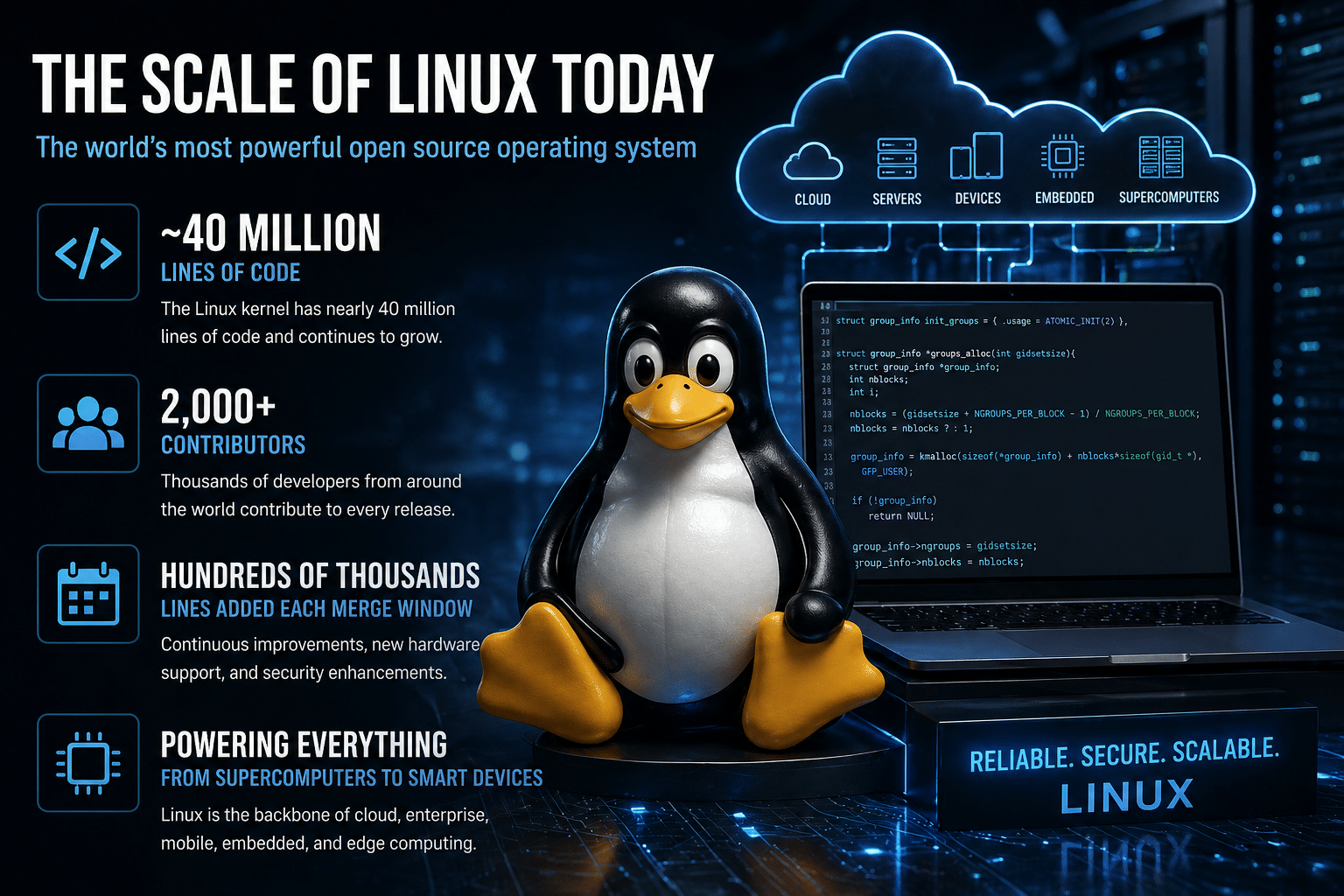
The Scale of Linux Today
The Linux kernel is no longer a “lightweight OS core.” It has evolved into a massive, highly modular system supporting:
- Cloud infrastructure
- Artificial Intelligence workloads
- High-frequency trading systems
- Embedded devices and IoT
- Supercomputing clusters
Key Growth Metrics
- Nearly 40 million lines of total code
- ~30 million lines of active functional code
- Thousands of contributors per release cycle
- Rapid merge cycles introducing hundreds of thousands of new lines
This growth reflects one reality:
Linux is no longer just an OS—it’s a universal computing platform.
AMD’s 6 Million Line Driver: Disrupter
One of the most fascinating developments is the expansion of AMD’s open-source GPU ecosystem.
The AMDGPU and its compute counterpart AMDKFD now exceed 6 million lines of code.
Why This Matters
This isn’t just “driver bloat.” It represents:
1. GPU Computing Becoming Core Infrastructure
GPUs are no longer just for gaming—they power:
- Machine Learning training
- Data analytics
- Scientific simulations
- Blockchain validation
- Rendering and media processing
The massive driver size reflects deep hardware-software integration required for these workloads.
2. Open-Source Dominance in GPU Ecosystems
Historically, GPU drivers were proprietary and restrictive.
Now:
- AMD’s drivers are largely open-source
- Integrated directly into the Linux kernel
- Continuously optimized by global contributors
This makes Linux the preferred platform for GPU-heavy workloads.
3. Enterprise-Grade Stability
A larger codebase often means:
- More hardware compatibility
- Better fallback mechanisms
- Extensive testing across environments
Result: Production-ready GPU performance on Linux
Why the Linux Kernel Keeps Expanding
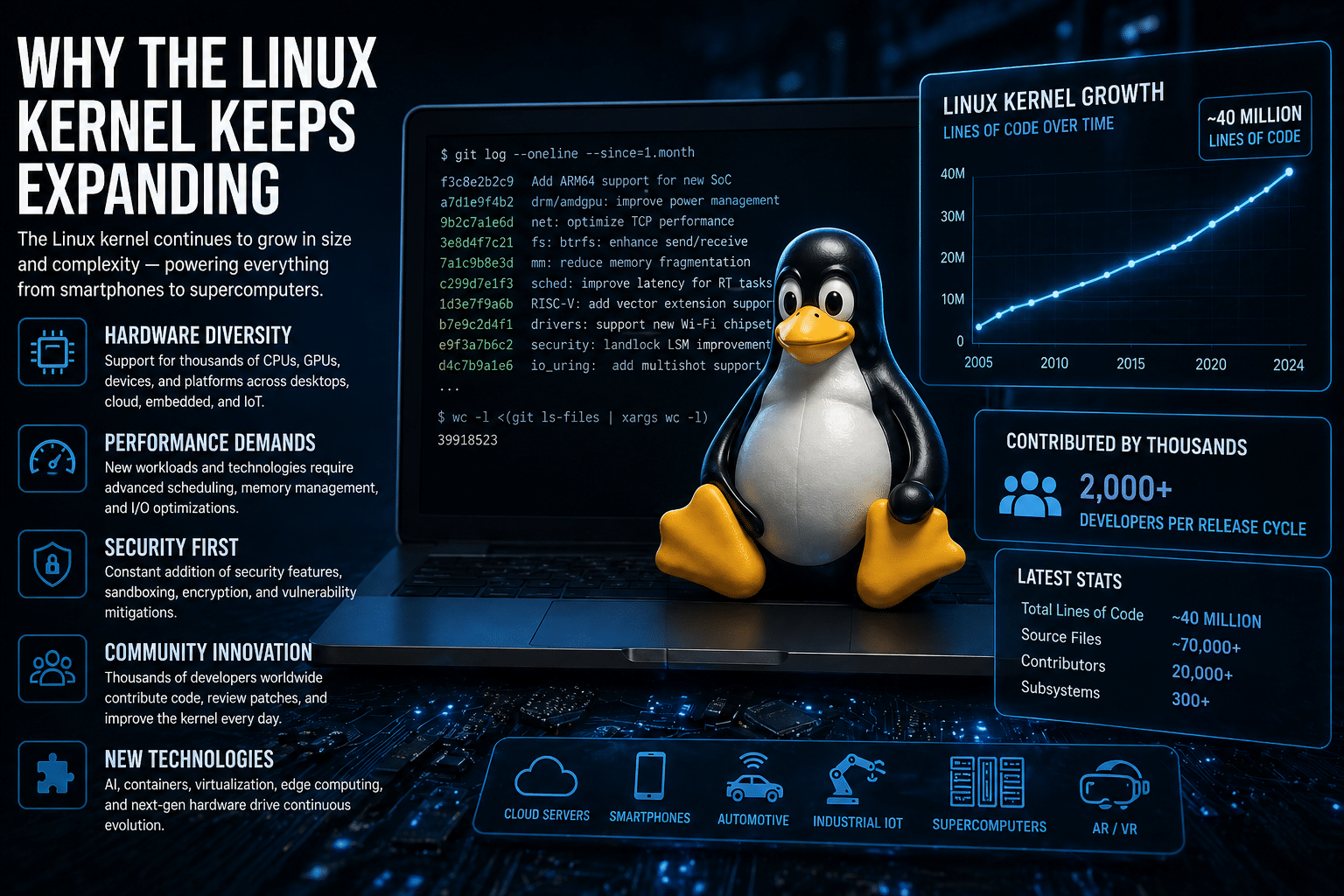
At first glance, a 40M+ line kernel may seem excessive. But the growth is intentional and necessary.
🔹 Hardware Explosion
Linux supports:
- CPUs (x86, ARM, RISC-V)
- GPUs
- Storage controllers
- Networking hardware
- Embedded chips
Each new device adds complexity.
🔹 AI & High-Performance Computing
The rise of AI has changed everything.
Linux now includes:
- Optimized schedulers
- Memory management for large datasets
- GPU acceleration frameworks
This directly contributes to kernel expansion.
🔹 Security Layers
Modern threats require:
- Kernel-level protections
- Sandboxing
- Access control systems
Security is no longer optional—it’s foundational.
🔹 Continuous Innovation
Linux evolves faster than any proprietary OS because:
- Thousands of developers contribute
- Companies like AMD, Intel, and Google push updates
- Community testing accelerates improvements
The Trade-Off: Complexity vs Power
With great scale comes real challenges.
Key Issues
- Harder debugging
- Increased resource requirements
- Longer compile times
- Complex dependency management
For developers and businesses, this means:
Your infrastructure must keep up with the kernel’s evolution
Infrastructure: The Real Bottleneck
Here’s the uncomfortable truth:
Most performance issues today are not due to Linux—but due to underpowered infrastructure.
Running modern Linux workloads on weak systems leads to:
- CPU throttling
- Memory bottlenecks
- Disk I/O limitations
- Increased latency
This becomes critical when working with:
- GPU workloads
- Algorithmic trading
- Real-time analytics
- High-concurrency applications
How HOMERDP Enables Modern Linux Workloads
To fully leverage Linux’s evolving power, you need infrastructure designed for performance, scalability, and reliability.
1. High-Performance VPS for Heavy Workloads
HOMERDP offers VPS environments optimized for:
- Kernel compilation
- GPU-based processing
- Multi-threaded applications
Key advantages:
- NVMe/SSD storage
- Dedicated CPU cores
- High RAM configurations
Result: Faster builds, smoother execution, better efficiency.
2. Low-Latency Remote Desktop (RDP)
Access matters just as much as power.
HOMERDP provides:
- Ultra-low latency remote connections
- Stable session performance
- Cross-device accessibility
Ideal for:
- Developers managing remote Linux systems
- Traders running bots 24/7
- Engineers monitoring live systems
3. Scalability for Growing Kernel Demands
As Linux grows, so do its requirements.
With HOMERDP, you can:
- Upgrade resources instantly
- Scale CPU/RAM as workloads increase
- Handle traffic spikes without downtime
4. Stability for Mission-Critical Tasks
Whether it’s trading or production deployment:
- High uptime ensures reliability
- Isolated environments prevent conflicts
- Consistent performance reduces risk
Real-World Impact of This Growth
Developers
- Faster kernel builds with powerful VPS
- Better debugging with stable environments
AI Engineers
- Efficient GPU utilization via AMD drivers
- Scalable compute environments
Forex & Algo Traders
- Low latency execution
- 24/7 uptime for automated strategies
Enterprises
- Deploy Linux at scale
- Optimize cloud-native workloads
- Reduce dependency on proprietary systems
The Future of Linux & GPU Computing
The trajectory is clear.
What’s Coming Next
- Integration of Rust into the kernel for safer code
- Even larger GPU driver stacks
- Better AI-native kernel features
- Edge computing optimizations
- Deeper hardware abstraction
The Linux kernel may soon surpass 50 million lines.
But more importantly:
It will become the default foundation for all advanced computing.
Final Thoughts
The rise of a 40 million line Linux kernel and a 6 million line AMD GPU driver stack marks a turning point.
This is not just about size—it’s about:
- Capability
- Flexibility
- Performance
- Future readiness
However, there’s a catch:
Software evolution is outpacing infrastructure readiness.
To truly harness Linux’s potential, you need:
- High-performance environments
- Low-latency access
- Scalable resources
And that’s where HOMERDP plays a crucial role.
Takeaway
If you’re serious about:
- Linux development
- GPU workloads
- Trading automation
- High-performance computing
Then upgrading your infrastructure isn’t optional—it’s essential.
HOMERDP provides the foundation you need to thrive in this new era of computing.
EXPLORE MORE ; 10 Must-Have Linux Mint Extensions
READ OUR BLOGS