

GNOME Gets Better with DropBeat: Features, Benefits, and Why It Matters
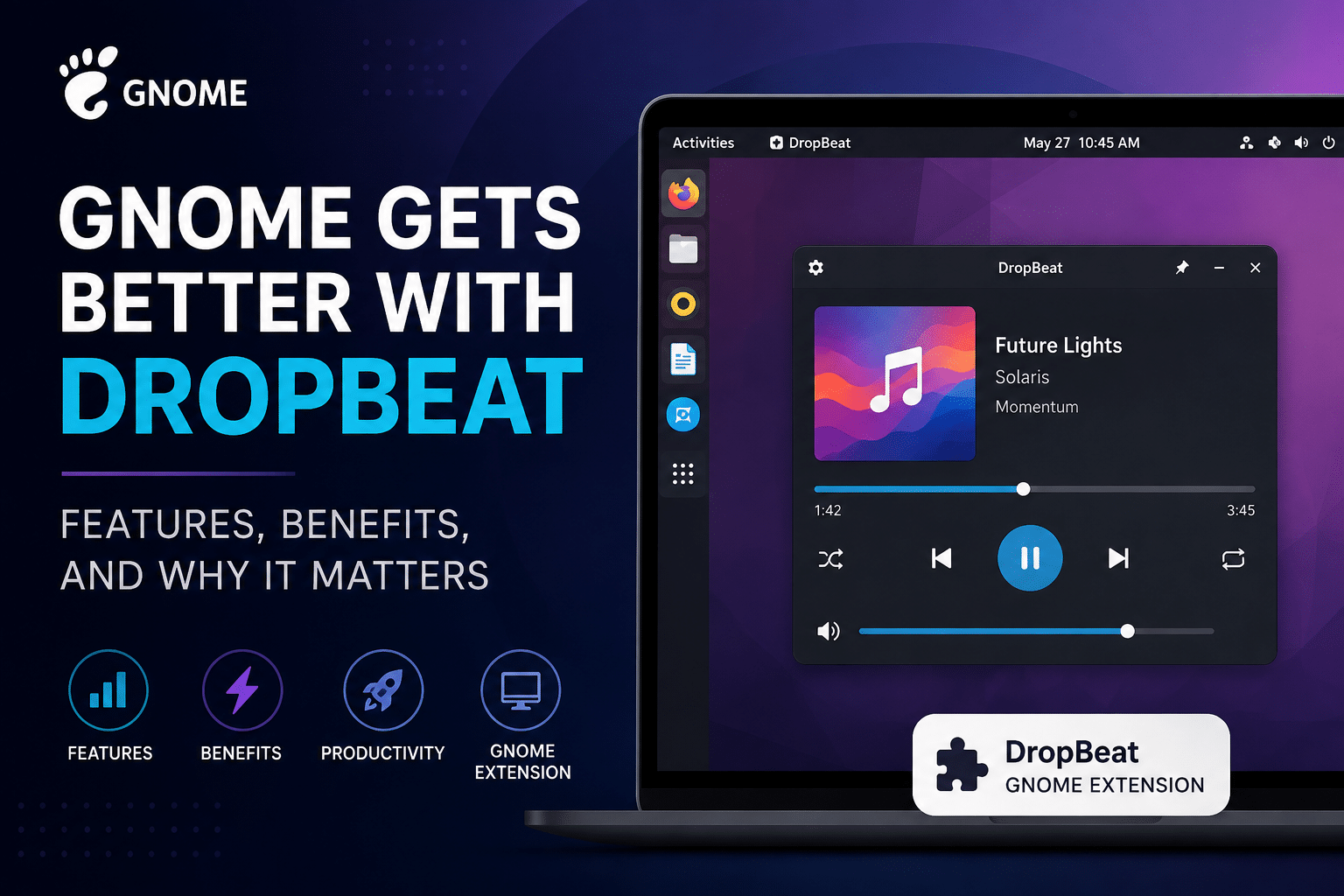
The Linux desktop has come a long way over the past decade. Once viewed primarily as an operating system for developers and system administrators, Linux has evolved into a polished, feature-rich platform that appeals to professionals, creators, businesses, and enthusiasts alike. Much of this transformation comes from the open-source community, where developers continuously introduce innovative tools that improve productivity without compromising performance.
One of the latest additions to the GNOME ecosystem is DropBeat, a lightweight extension designed to simplify music playback controls directly from the desktop. Although music controls may appear to be a minor convenience, they represent a much larger trend in Linux desktop development: reducing distractions, improving workflow, and delivering a more seamless user experience.
As users spend more time coding, designing, writing, or managing cloud infrastructure on Linux, every interaction matters. Features that eliminate unnecessary clicks or context switching help users stay focused on their work, making seemingly small improvements surprisingly valuable over time.
This article explores what DropBeat offers, why it matters to GNOME users, how it reflects the future of Linux desktop computing, and why businesses investing in Linux infrastructure should also focus on reliable backend management with solutions like HOMERDP.
The Evolution of the GNOME Desktop
GNOME has established itself as one of the most popular desktop environments in the Linux ecosystem. Known for its clean design, intuitive interface, and focus on usability, GNOME powers popular Linux distributions including Ubuntu, Fedora, Debian, Pop!_OS, and many enterprise deployments.
Unlike traditional desktop environments that emphasize extensive built-in customization, GNOME adopts a minimalist philosophy. Its developers focus on delivering a distraction-free experience while allowing users to extend functionality through a rich ecosystem of extensions.
This modular approach offers several advantages:
- Users install only the features they need.
- The desktop remains lightweight.
- Extensions evolve independently of the core desktop.
- Developers can innovate rapidly without waiting for major GNOME releases.
- Organizations can tailor desktop environments to different teams and workflows.
DropBeat fits perfectly into this philosophy by adding a focused capability without cluttering the desktop.
What Is DropBeat?
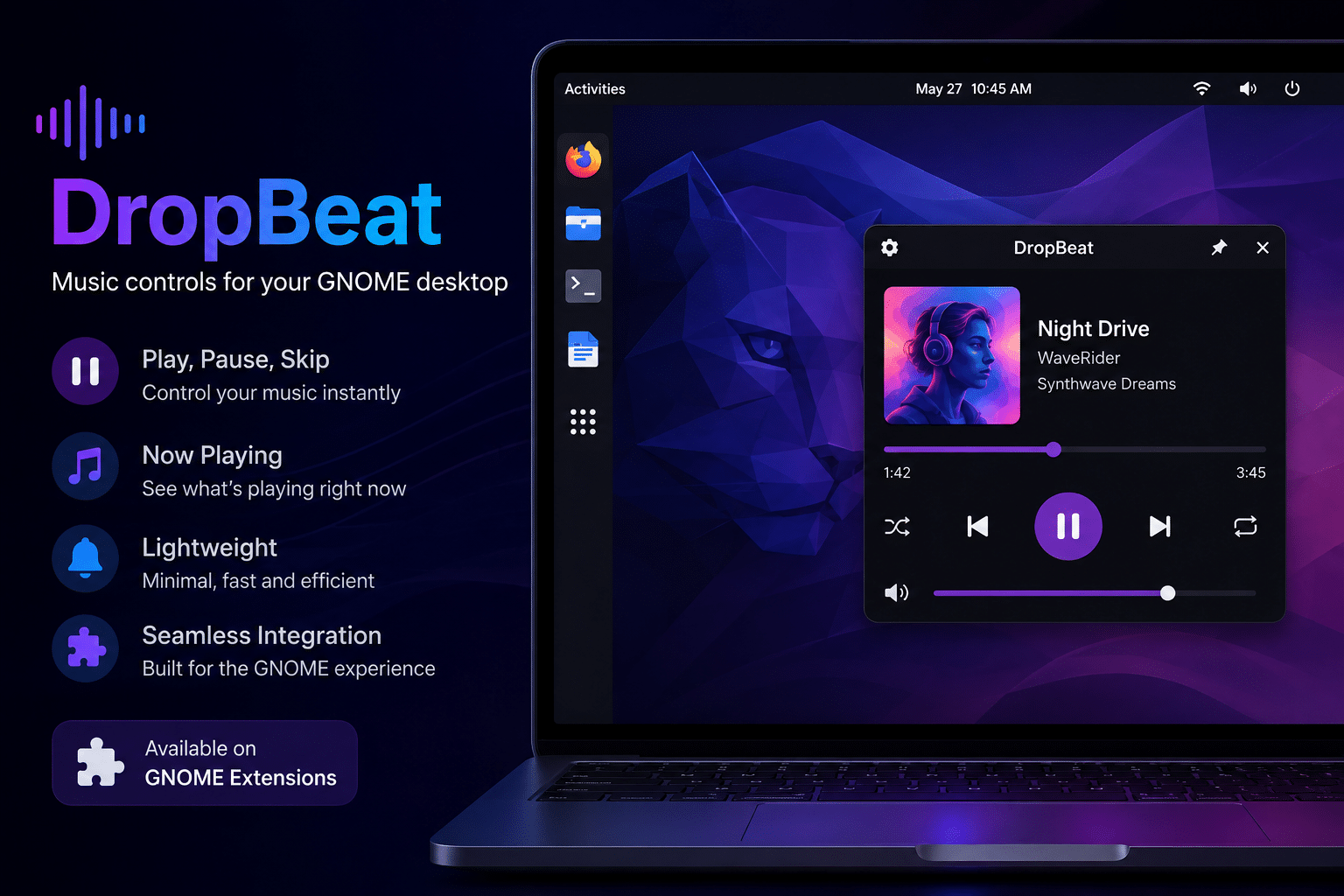
DropBeat is a GNOME extension that provides convenient desktop-based music playback controls, allowing users to interact with their favorite media without constantly switching between applications.
Instead of opening a streaming application or navigating multiple windows, users can control playback more naturally while continuing their primary work.
Depending on the music player or media service being used, DropBeat integrates with standard Linux media controls to provide an efficient and responsive experience.
The extension embraces GNOME’s design language, making it feel like a native part of the desktop rather than a third-party add-on.
Why Small Productivity Improvements Matter
Many professionals underestimate the cumulative effect of small workflow optimizations.
Imagine a software developer who changes music tracks, pauses audio during meetings, or skips songs dozens of times throughout the workday.
If each interaction requires:
- locating the music application,
- restoring its window,
- changing tracks,
- minimizing the application again,
those interruptions quickly add up.
Even saving just five seconds per interaction can translate into several minutes every day. Over months or years, those productivity gains become meaningful.
Research consistently shows that recovering from interruptions often takes much longer than the interruption itself. Regaining concentration after switching contexts can require several minutes, particularly during complex tasks such as programming, infrastructure management, or technical writing.
DropBeat helps reduce these unnecessary interruptions by bringing commonly used controls closer to where users already work.
Why Linux Users Appreciate Extensions
Unlike many commercial operating systems that restrict deep desktop customization, Linux encourages users to shape their environments according to their workflows.
GNOME extensions have become one of the platform’s greatest strengths.
Popular extensions improve areas such as:
- workspace management,
- notifications,
- system monitoring,
- clipboard history,
- weather information,
- productivity timers,
- audio controls,
- application launching,
- resource monitoring.
DropBeat joins this growing ecosystem by addressing media playback in an elegant and efficient manner.
Rather than forcing every user into one interface, GNOME lets individuals choose exactly the enhancements they need.
Features That Make DropBeat Useful
Although lightweight, DropBeat delivers several practical advantages.
1. Quick Music Controls
Users can play, pause, skip, or resume tracks without interrupting their workflow.
2. Better Workflow
Developers, designers, and writers spend less time switching between applications.
3. Native GNOME Experience
The extension aligns with GNOME’s design principles, creating a consistent desktop experience.
4. Lightweight Performance
Unlike large desktop applications, GNOME extensions consume relatively few system resources.
5. Easy Integration
DropBeat complements existing Linux media systems instead of replacing them.
6. Reduced Desktop Clutter
Users no longer need to keep music applications visible simply to change songs.
7. Improved User Experience
Small conveniences often have a surprisingly large impact on everyday computing satisfaction.
Linux Desktops Are Becoming Enterprise Ready
The growing popularity of Linux extends well beyond hobbyists.
Organizations increasingly deploy Linux for:
- software engineering,
- DevOps,
- cloud-native development,
- cybersecurity,
- artificial intelligence,
- data science,
- research computing,
- education.
The reasons are clear.
Linux offers:
- excellent stability,
- lower licensing costs,
- strong security,
- extensive customization,
- exceptional performance,
- broad hardware compatibility,
- a thriving open-source ecosystem.
As Linux adoption expands, user experience becomes increasingly important.
Professionals expect desktop environments that rival commercial operating systems in both appearance and functionality.
Extensions like DropBeat demonstrate how community-driven innovation continues to narrow that gap.
Beyond the Desktop: Why Infrastructure Matters
A polished desktop experience is only one part of a successful Linux environment.
Behind every productive developer is reliable infrastructure.
Organizations need secure servers, dependable remote access, cloud connectivity, automated backups, and proactive monitoring to ensure teams can work efficiently.
This is where HOMERDP plays an important role.
HOMERDP helps businesses deploy, manage, secure, and optimize Linux environments that power modern applications and distributed teams.
Whether your organization runs Ubuntu servers, virtual desktops, cloud workloads, or hybrid infrastructure, professional Linux management ensures your systems remain available, secure, and high-performing.
Instead of spending valuable engineering time troubleshooting infrastructure, businesses can focus on innovation while experienced professionals handle server administration, security hardening, monitoring, and performance optimization.
How DropBeat Improves Everyday Productivity
The most effective productivity tools are often the ones you barely notice. They work quietly in the background, eliminate repetitive tasks, and let you stay focused on what matters. DropBeat follows this philosophy by integrating music controls directly into the GNOME desktop instead of requiring users to switch between windows or applications.
For professionals who spend most of their day on Linux, these small improvements add up quickly. Consider a software developer debugging code, a DevOps engineer monitoring servers, or a content writer drafting documentation. Interrupting the workflow to locate a media player, change a song, and return to work may only take a few seconds, but repeated dozens of times, those interruptions can reduce concentration and efficiency.
DropBeat minimizes these distractions by making playback controls immediately accessible.
Real-World Use Cases
Different professionals can benefit from a streamlined desktop experience.
Software Developers
- Control music without leaving the IDE.
- Stay focused during long coding sessions.
- Reduce unnecessary application switching.
DevOps Engineers
- Monitor infrastructure while controlling background music.
- Keep dashboards visible at all times.
- Maintain uninterrupted workflows during deployments.
System Administrators
- Manage multiple remote servers without desktop clutter.
- Access media controls while monitoring system performance.
Content Creators
- Continue writing, editing, or designing without losing focus.
- Improve creative flow through seamless music management.
Students
- Study with background music while keeping educational resources front and center.
Why GNOME Extensions Continue to Thrive
One of GNOME’s greatest strengths is its extension ecosystem. Rather than forcing every user into the same desktop experience, GNOME allows individuals to customize their environment according to their needs.
This flexibility has encouraged developers worldwide to create extensions that improve usability, accessibility, productivity, and aesthetics.
Popular categories include:
- Clipboard managers
- Workspace enhancements
- System monitors
- Weather widgets
- Notification improvements
- Window management tools
- Audio controls
- Appearance customization
- Workflow automation
DropBeat joins this ecosystem by addressing a common everyday task in an elegant and lightweight manner.
Linux Desktop Adoption Continues to Expand
Linux is no longer limited to developers and enthusiasts. Organizations across industries now deploy Linux workstations because of their security, flexibility, and lower total cost of ownership.
Several trends are driving this growth:
Cloud Computing
Most cloud platforms run on Linux-based infrastructure. Engineers who develop cloud-native applications often prefer Linux desktops because they closely mirror production environments.
Artificial Intelligence
Machine learning frameworks such as TensorFlow and PyTorch are widely used on Linux systems. Researchers and AI engineers benefit from native Linux compatibility and performance.
Cybersecurity
Security professionals rely heavily on Linux distributions for penetration testing, digital forensics, and incident response.
Software Development
Linux remains one of the most popular operating systems among professional developers because of its package management, scripting capabilities, and development tools.
Education
Universities increasingly introduce Linux into computer science and engineering programs, preparing students for modern IT environments.
As adoption grows, user expectations evolve. People now expect Linux desktops to deliver both enterprise-grade performance and consumer-friendly usability.
User Experience Is Becoming a Competitive Advantage
For many years, Linux focused primarily on performance, flexibility, and openness. While those qualities remain essential, modern users also expect polished interfaces and intuitive interactions.
Small usability improvements have become an important part of the desktop experience.
Features like:
- Quick search
- Better notifications
- Simplified settings
- Integrated media controls
- Smooth animations
- Consistent design language
collectively transform how users interact with their systems.
DropBeat contributes to this broader movement by making media playback feel like a natural part of the desktop rather than a separate activity.
Security and Stability Remain Essential
Convenience should never compromise reliability.
Organizations deploying Linux desktops also need secure backend infrastructure that protects sensitive data and ensures continuous availability.
This includes:
- Regular system updates
- Firewall configuration
- Secure SSH access
- Identity and access management
- Automated backups
- Disaster recovery planning
- Continuous monitoring
- Performance optimization
While desktop extensions improve the user experience, infrastructure determines whether businesses can operate efficiently at scale.
How HOMERDP Supports Modern Linux Environments
Businesses often invest significant time customizing developer workstations but overlook the infrastructure that powers their operations.
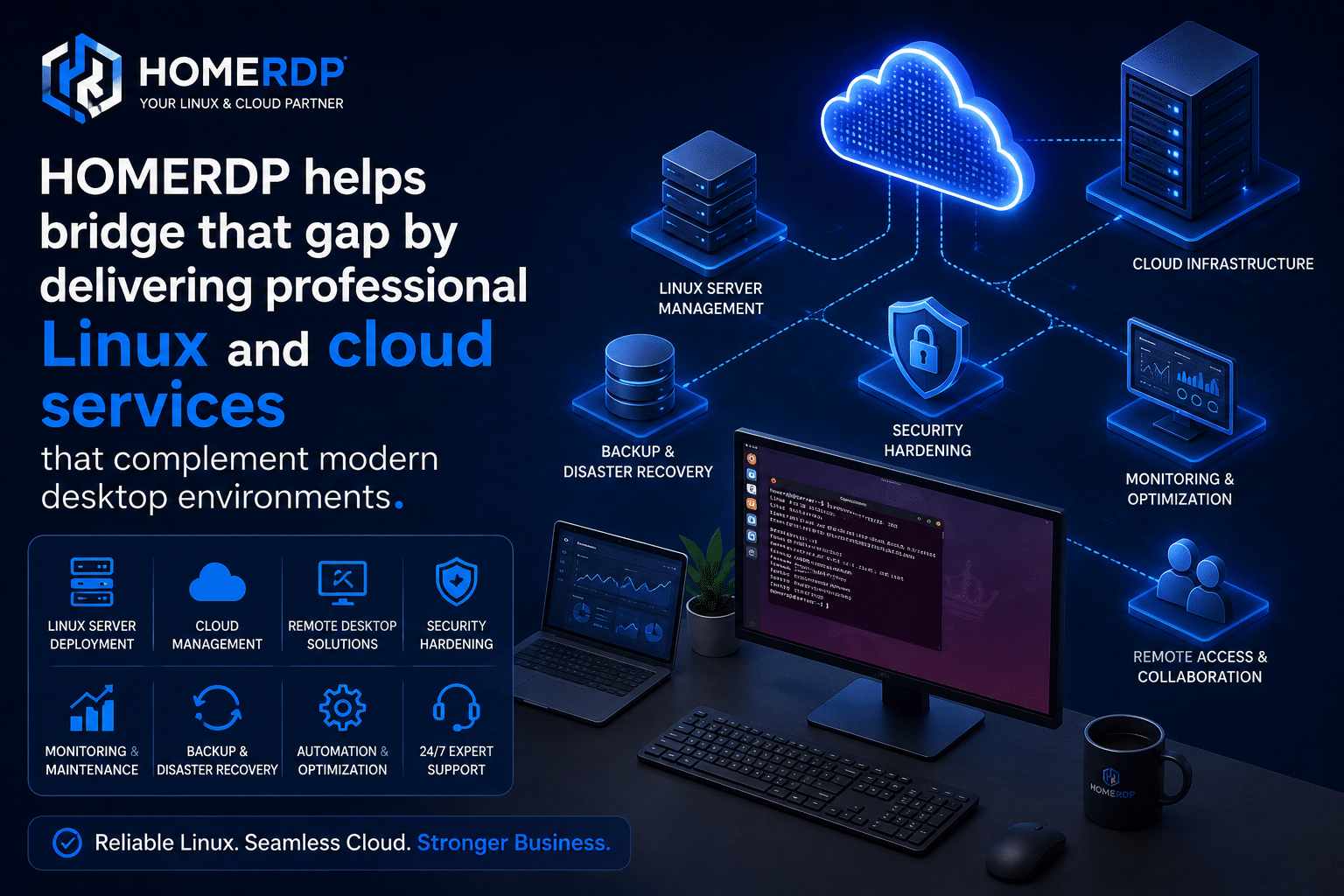
HOMERDP helps bridge that gap by delivering professional Linux and cloud services that complement modern desktop environments.
Key services include:
Linux Server Deployment
Deploy secure Ubuntu, Debian, CentOS, AlmaLinux, and other Linux servers tailored to your workload.
Remote Desktop Solutions
Provide secure remote access for distributed teams while maintaining strong security practices and reliable performance.
Cloud Infrastructure Management
Build, optimize, and manage cloud environments across leading cloud platforms to improve scalability and operational efficiency.
Server Monitoring
Identify performance issues before they become outages through continuous monitoring and proactive maintenance.
Security Hardening
Strengthen Linux servers with best practices, access controls, firewall configuration, and routine maintenance.
Backup and Disaster Recovery
Protect critical business data with automated backup strategies and tested recovery plans.
Performance Optimization
Fine-tune Linux systems for maximum speed, responsiveness, and reliability.
By combining a polished desktop experience with professionally managed infrastructure, organizations create environments where employees can focus on delivering value instead of troubleshooting technical issues.
Looking Ahead
DropBeat may seem like a small addition to GNOME, but it represents something much larger. Every thoughtfully designed extension contributes to a desktop experience that feels faster, cleaner, and more intuitive.
As Linux continues to gain momentum across software development, cloud computing, cybersecurity, artificial intelligence, and enterprise IT, the ecosystem will benefit from both large innovations and small quality-of-life improvements.
The future of Linux isn’t defined by one breakthrough feature. It is shaped by thousands of community contributions that collectively make the platform more productive, more accessible, and more enjoyable to use.
DropBeat is one more example of how open-source innovation continues to move Linux forward—one thoughtful improvement at a time.
EXPLORE MORE ; Why COSMIC Is Linux’s Most Exciting Desktop Project
READ OUR BLOGS