

Sailfish OS vs Android vs iPhone: A Deep Technical Analysis of Mobile Operating Systems in 2026
The smartphone operating system market appears settled.
Android powers billions of devices worldwide.
Apple’s iOS dominates the premium smartphone segment.
Together, they control virtually the entire global smartphone ecosystem.
Yet beneath this apparent stability, an alternative movement continues to grow.
Developers, privacy advocates, Linux enthusiasts, cybersecurity professionals, and digital sovereignty supporters are increasingly exploring alternatives such as Sailfish OS.
For many users, Sailfish OS is simply “the Linux phone OS.”
For technologists, however, it represents something much bigger.
It challenges the assumptions that modern mobile computing must be tied to Google or Apple ecosystems.
It explores what happens when Linux principles meet mobile hardware.
And it raises an increasingly important question:
Can an independent Linux-based mobile operating system compete technically with Android and iPhone?
The answer is complex.
To understand it, we need to analyze architecture, security, privacy, application ecosystems, performance, development environments, enterprise readiness, and future viability.
Let’s dive deep.
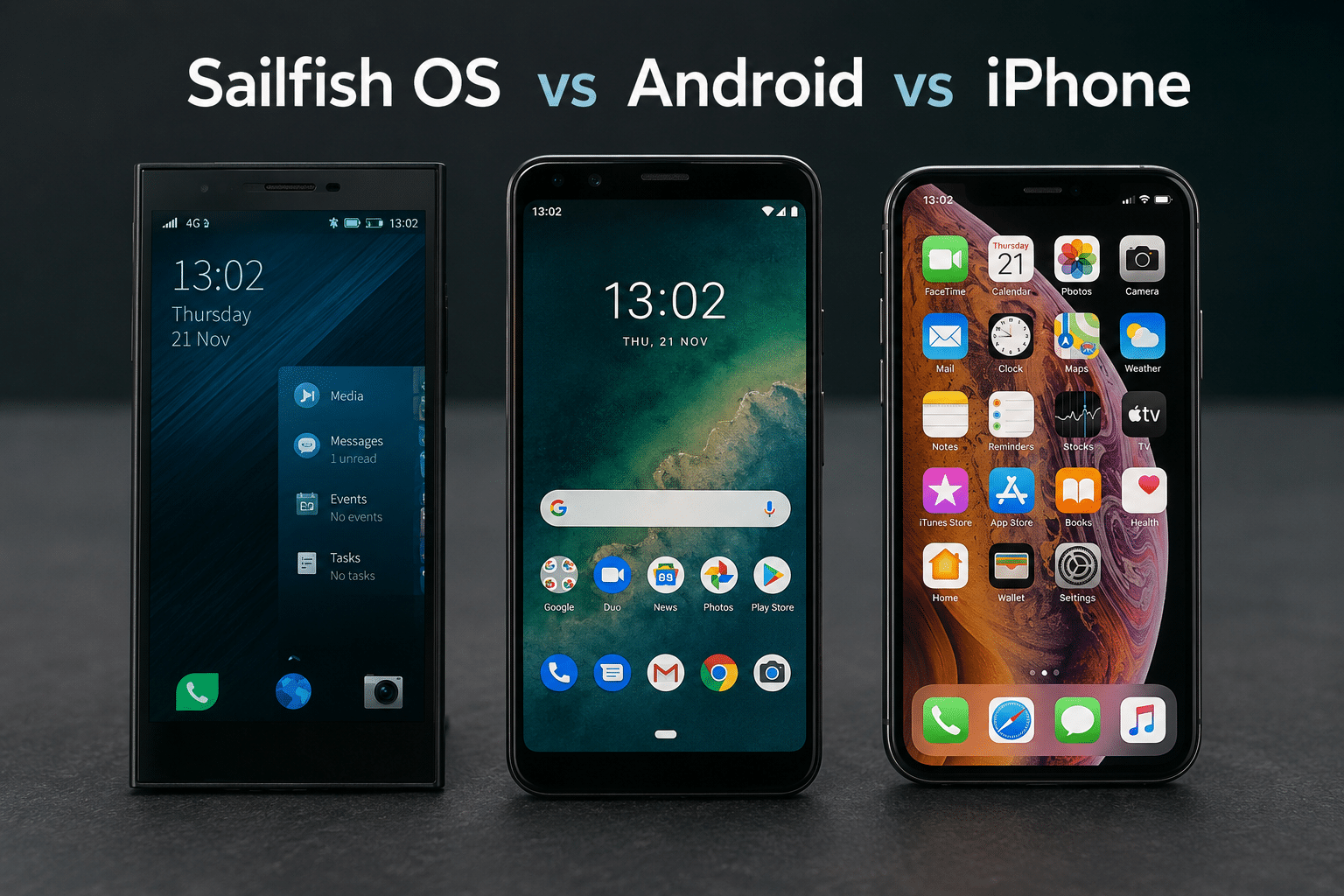
The Mobile Operating System Landscape
Before comparing the platforms, it’s important to understand their origins.
Android
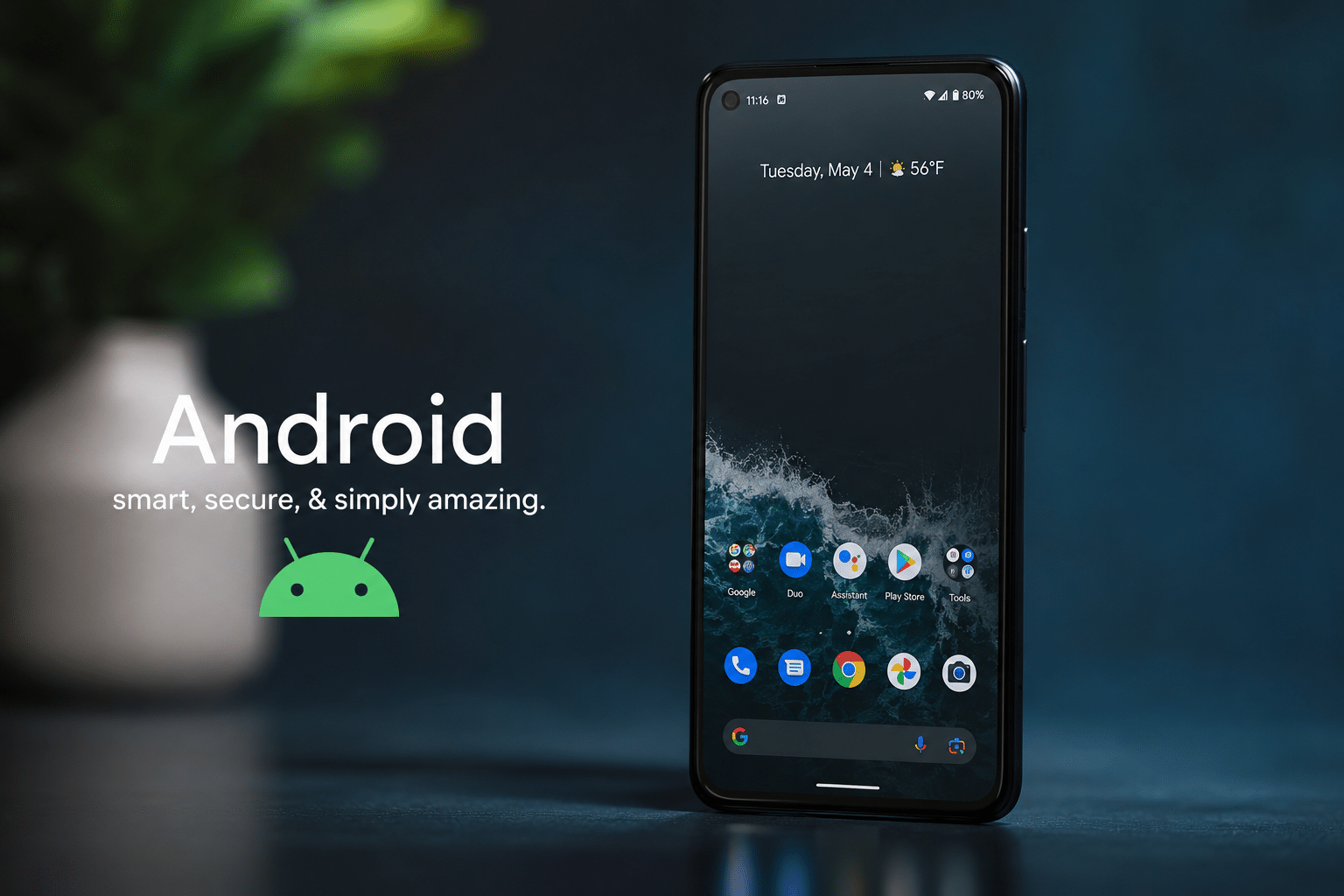
Google introduced Android in 2008.
Android uses a Linux kernel but layers Google’s ecosystem on top.
Modern Android consists of:
- Linux kernel
- Android Runtime (ART)
- Hardware Abstraction Layer (HAL)
- Android Framework
- Google Mobile Services (GMS)
Today Android powers:
- Samsung Galaxy devices
- Google Pixel devices
- OnePlus phones
- Xiaomi smartphones
- Motorola devices
- Thousands of IoT systems
Android dominates global market share because of its flexibility and manufacturer support.
iPhone (iOS)
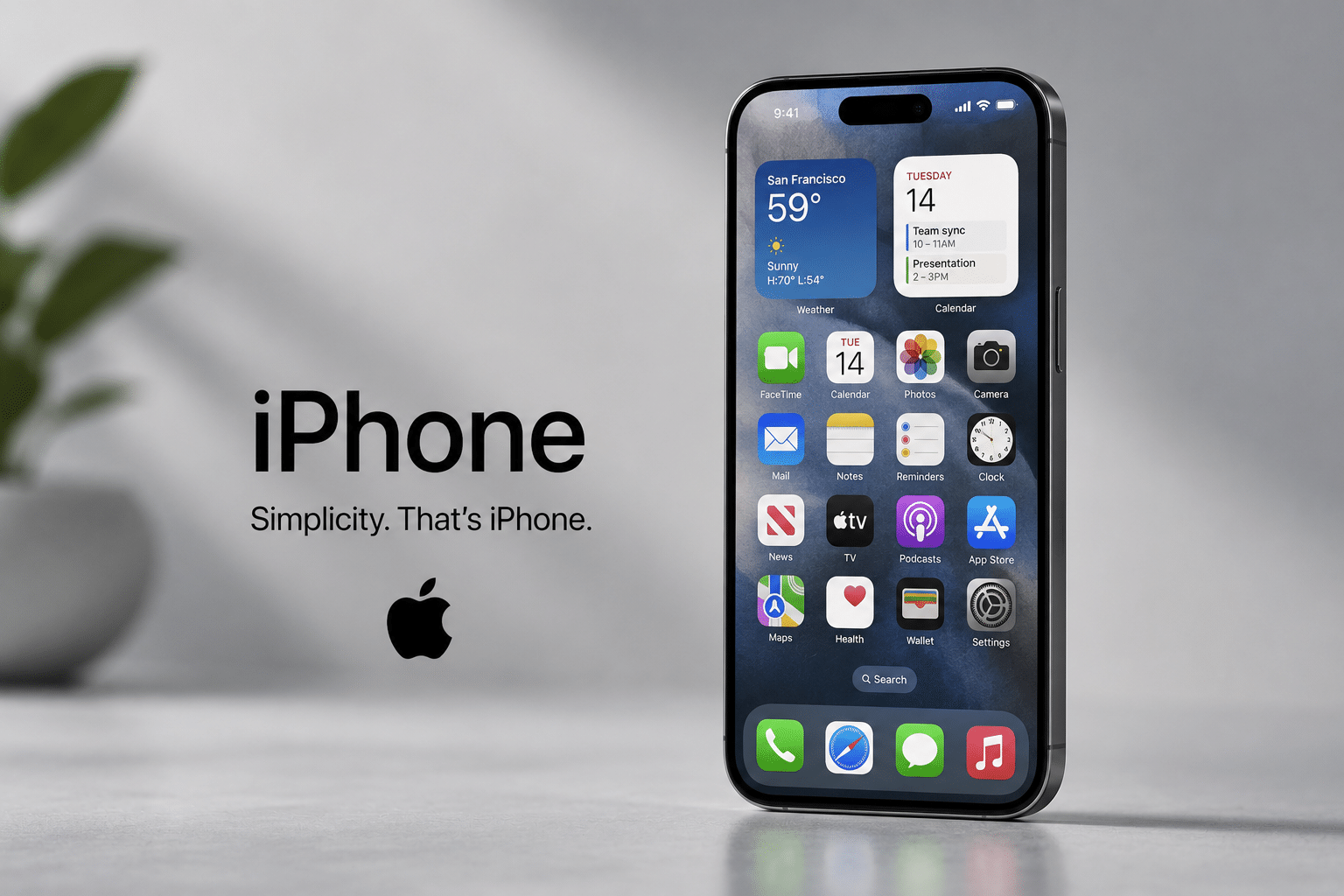
Apple launched iPhone OS in 2007.
Later renamed iOS, the operating system is built upon:
- Darwin kernel
- BSD components
- Mach microkernel technologies
Unlike Android, Apple controls:
- Hardware
- Software
- App distribution
- Security model
- Update lifecycle
This vertical integration creates a highly optimized ecosystem.
Sailfish OS
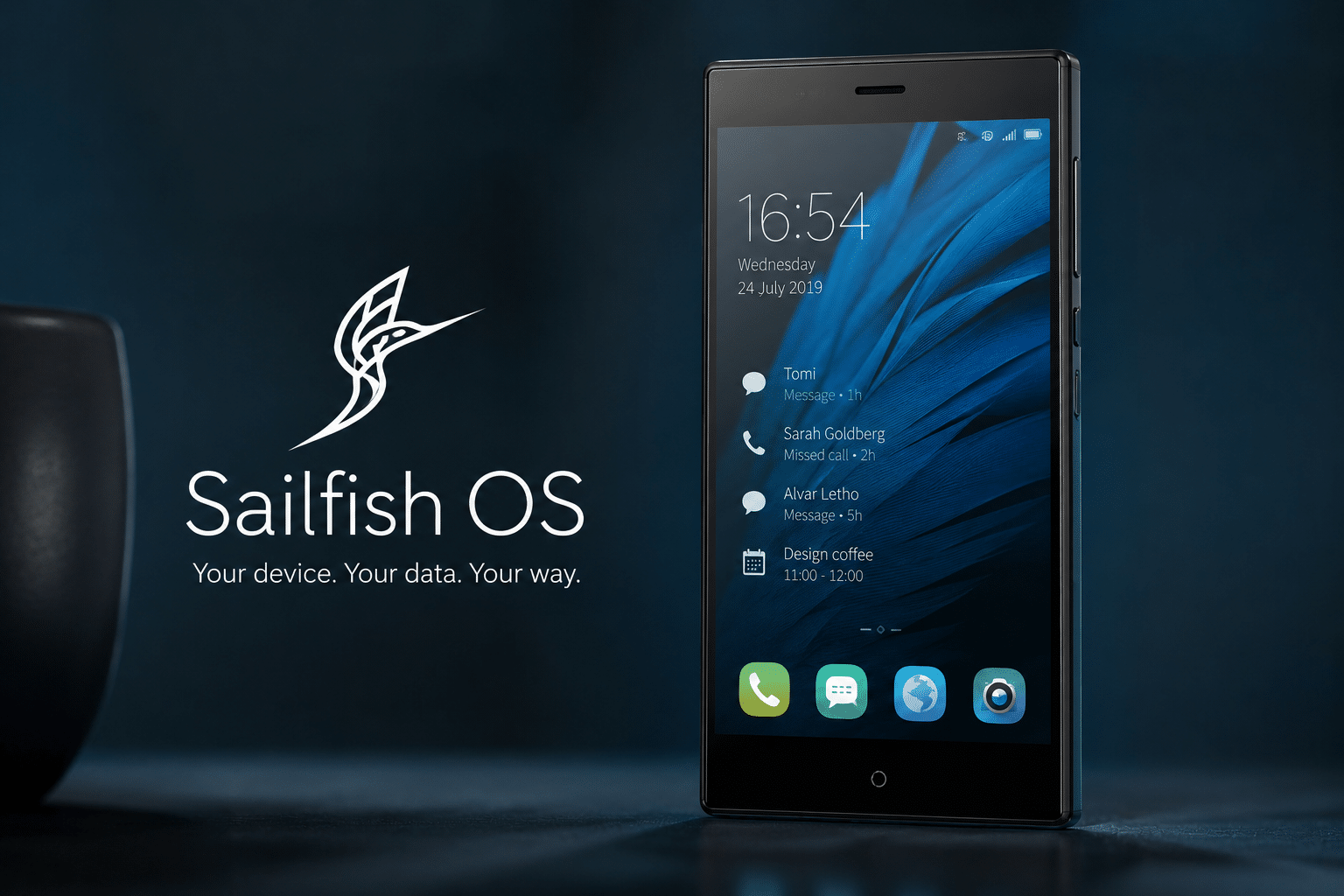
Sailfish OS emerged from former Nokia MeeGo developers.
Developed by Jolla, Sailfish OS takes a fundamentally different approach.
It is based primarily on:
- Linux kernel
- Mer Core
- Qt Framework
- Wayland display server
Unlike Android and iOS, Sailfish prioritizes:
- User control
- Linux compatibility
- Independence
- Privacy
- Open technologies
Its philosophy resembles desktop Linux far more than traditional smartphone platforms.
Architecture Comparison
The most significant differences begin at the architecture layer.
Android Architecture
Android sits on top of Linux but heavily abstracts users from Linux itself.
Architecture stack:
Application Layer
↓
Java/Kotlin Runtime
↓
Android Framework
↓
Native Libraries
↓
Linux Kernel
Advantages:
✓ Massive application ecosystem
✓ Strong hardware support
✓ Flexible development model
Disadvantages:
✗ Heavy dependence on Google services
✗ Vendor fragmentation
✗ Inconsistent update schedules
iOS Architecture
Apple’s architecture emphasizes optimization and control.
Application Layer
↓
Cocoa Touch
↓
Media Services
↓
Core Services
↓
Darwin Kernel
Advantages:
✓ Tight integration
✓ Predictable updates
✓ Strong performance
Disadvantages:
✗ Closed ecosystem
✗ Limited customization
✗ Restricted development environment
Sailfish OS Architecture
Sailfish adopts a Linux-first design philosophy.
Applications
↓
Qt/QML Framework
↓
Mer Middleware
↓
Linux Kernel
Advantages:
✓ Linux-native foundation
✓ Open technologies
✓ Developer flexibility
✓ Reduced ecosystem dependency
Disadvantages:
✗ Smaller developer community
✗ Limited hardware support
✗ Smaller application ecosystem
From a systems engineering perspective, Sailfish remains the closest smartphone OS to traditional Linux distributions.
User Interface Design Philosophy
User interfaces reveal each platform’s priorities.
Android
Android focuses on:
- Accessibility
- Broad compatibility
- Familiar workflows
Material Design provides consistency across devices.
The interface balances customization with usability.
iPhone
Apple prioritizes:
- Simplicity
- Predictability
- Consistency
Every interaction follows strict design principles.
This creates an intuitive experience but limits user control.
Sailfish OS
Sailfish embraces gesture-driven computing.
Many users consider its interface among the most elegant mobile designs ever created.
Instead of:
- Navigation buttons
- Extensive menus
Sailfish relies heavily on gestures.
Benefits include:
✓ Fast navigation
✓ Minimal interface clutter
✓ Efficient multitasking
The learning curve is higher initially but productivity often improves afterward.
Performance Analysis
Performance involves more than benchmark numbers.
It includes:
- Responsiveness
- Memory efficiency
- Resource utilization
- Power consumption
Android Performance
Modern Android devices achieve impressive performance.
However performance varies because:
- Manufacturers customize Android
- Hardware configurations differ
- Background services vary
This fragmentation creates inconsistent experiences.
iPhone Performance
Apple consistently leads mobile performance benchmarks.
Reasons include:
- Custom silicon
- Hardware optimization
- Software integration
- Controlled ecosystem
The result is highly predictable performance.
Sailfish Performance
Sailfish often feels surprisingly responsive.
Reasons include:
- Lightweight architecture
- Lower background overhead
- Reduced telemetry
- Linux efficiency
While benchmark scores may not match flagship Android devices or iPhones, real-world responsiveness remains excellent.
Security Architecture
Security is where operating system design becomes critically important.
Android Security
Android employs:
- Application sandboxing
- SELinux
- Verified Boot
- Permission controls
Recent Android releases have dramatically improved security.
Challenges remain because:
- OEM update schedules vary
- Users delay updates
- Device fragmentation persists
iPhone Security
Apple maintains arguably the strongest mobile security ecosystem.
Features include:
- Secure Enclave
- Hardware-backed encryption
- App Store review process
- Rapid update deployment
Security benefits from Apple’s vertical integration.
Sailfish Security
Sailfish takes a different approach.
Security relies heavily on:
- Linux foundations
- Open-source components
- Reduced attack surface
Advantages include:
✓ Less malware targeting
✓ Smaller attack ecosystem
✓ Greater transparency
Challenges include:
✗ Smaller security research community
✗ Fewer enterprise integrations
✗ Less third-party auditing
Privacy Comparison
Privacy has become one of the most important differentiators in modern computing.
Android Privacy
Android has improved privacy significantly.
Features include:
- Permission controls
- Privacy dashboards
- Background activity restrictions
However Android often remains tied to:
- Google accounts
- Google services
- Google analytics infrastructure
This dependency concerns privacy-focused users.
iPhone Privacy
Apple aggressively markets privacy.
Features include:
- App Tracking Transparency
- On-device processing
- Enhanced permissions
Apple generally collects less advertising-related data than Google.
However users still remain within Apple’s ecosystem.
Sailfish Privacy
Privacy is one of Sailfish’s strongest advantages.
The platform minimizes dependency on:
- Advertising systems
- Data collection frameworks
- Large cloud ecosystems
This appeals strongly to:
- Governments
- Security professionals
- Privacy advocates
- Enterprise users seeking digital sovereignty
Application Ecosystem Comparison
This is where the battle is often won or lost.
Android Applications
Google Play contains millions of applications.
Categories include:
- Banking
- Productivity
- Gaming
- AI tools
- Enterprise software
Android’s ecosystem remains unmatched in flexibility.
iPhone Applications
Apple’s App Store offers:
- High-quality applications
- Strong developer support
- Excellent monetization opportunities
Developers often prioritize iOS because of revenue potential.
Sailfish Applications
This remains Sailfish’s greatest challenge.
Native applications exist but are limited.
Many users rely on:
- Android compatibility layers
- Web applications
- Community-developed software
For mainstream consumers this can be a significant barrier.
Developer Experience
Developers often evaluate platforms differently than consumers.
Android Development
Languages:
- Kotlin
- Java
- C++
Frameworks:
- Android Studio
- Jetpack Compose
Strengths:
✓ Massive community
✓ Extensive documentation
✓ Mature ecosystem
iPhone Development
Languages:
- Swift
- Objective-C
Frameworks:
- Xcode
- SwiftUI
Strengths:
✓ Premium audience
✓ Excellent tooling
✓ Strong monetization
Sailfish Development
Languages:
- C++
- Qt
- QML
Strengths:
✓ Linux familiarity
✓ Open technologies
✓ Native performance
Challenges:
✗ Smaller community
✗ Limited resources
✗ Fewer commercial opportunities
Yet many Linux developers find Sailfish development intellectually rewarding.
Enterprise Readiness
Businesses evaluate mobile platforms differently.
Key factors include:
- Security
- Device management
- Compliance
- Support
Android Enterprise
Strengths:
✓ Enterprise mobility management
✓ Wide hardware availability
✓ Corporate support
Apple Enterprise
Strengths:
✓ Predictable lifecycle
✓ Strong security
✓ Enterprise management tools
Sailfish Enterprise
Sailfish attracts organizations seeking:
- Digital sovereignty
- National infrastructure independence
- Open technology adoption
Some government sectors view Sailfish as an alternative to American-controlled ecosystems.
Why Sailfish Matters Beyond Smartphones
Many analysts focus only on market share.
This misses the bigger story.
Sailfish demonstrates demand for:
- Open computing
- Linux ecosystems
- User ownership
- Platform independence
These principles increasingly influence:
- Cloud computing
- Edge infrastructure
- AI development
- Enterprise IT
How HOMERDP Supports Linux-Centric Innovation
As organizations explore Linux-based technologies, they need environments for:
- Development
- Testing
- Validation
- Deployment
HOMERDP helps bridge this gap.
Teams can quickly provision:
- Linux desktops
- Cloud workstations
- Development servers
- Testing environments
without investing in costly hardware.
For developers experimenting with:
- Linux mobile projects
- Qt development
- Open-source applications
- Cross-platform software
HOMERDP provides scalable infrastructure that accelerates innovation.
Benefits include:
✓ Instant deployment
✓ Remote accessibility
✓ Flexible resource allocation
✓ Reduced infrastructure costs
✓ Faster testing cycles
As Linux technologies expand beyond servers into mobile, AI, and edge computing, cloud-hosted environments become increasingly valuable.
Final Verdict
The best mobile operating system depends entirely on your priorities.
Choose Android if you want:
✓ Maximum flexibility
✓ Broad hardware choices
✓ Massive application availability
Choose iPhone if you want:
✓ Best ecosystem integration
✓ Industry-leading optimization
✓ Long-term support
Choose Sailfish OS if you want:
✓ Linux-native computing
✓ Greater privacy
✓ Platform independence
✓ Open technology principles
✓ Digital sovereignty
Will Sailfish replace Android or iPhone?
Almost certainly not.
But that is not its mission.
Its importance lies in proving that alternative visions of mobile computing remain possible.
In a technology landscape increasingly controlled by a handful of ecosystems, Sailfish OS serves as a reminder that openness, user control, and Linux innovation still matter.
For developers, enterprises, and technology leaders, that lesson may ultimately prove more valuable than market share itself.
EXPLORE MORE ; Rocky Linux Meets Post-Quantum Security

READ OUR BLOGS