

Why Armbian 26.5 Is a Major Upgrade for ARM Servers, Edge Devices, and Developers
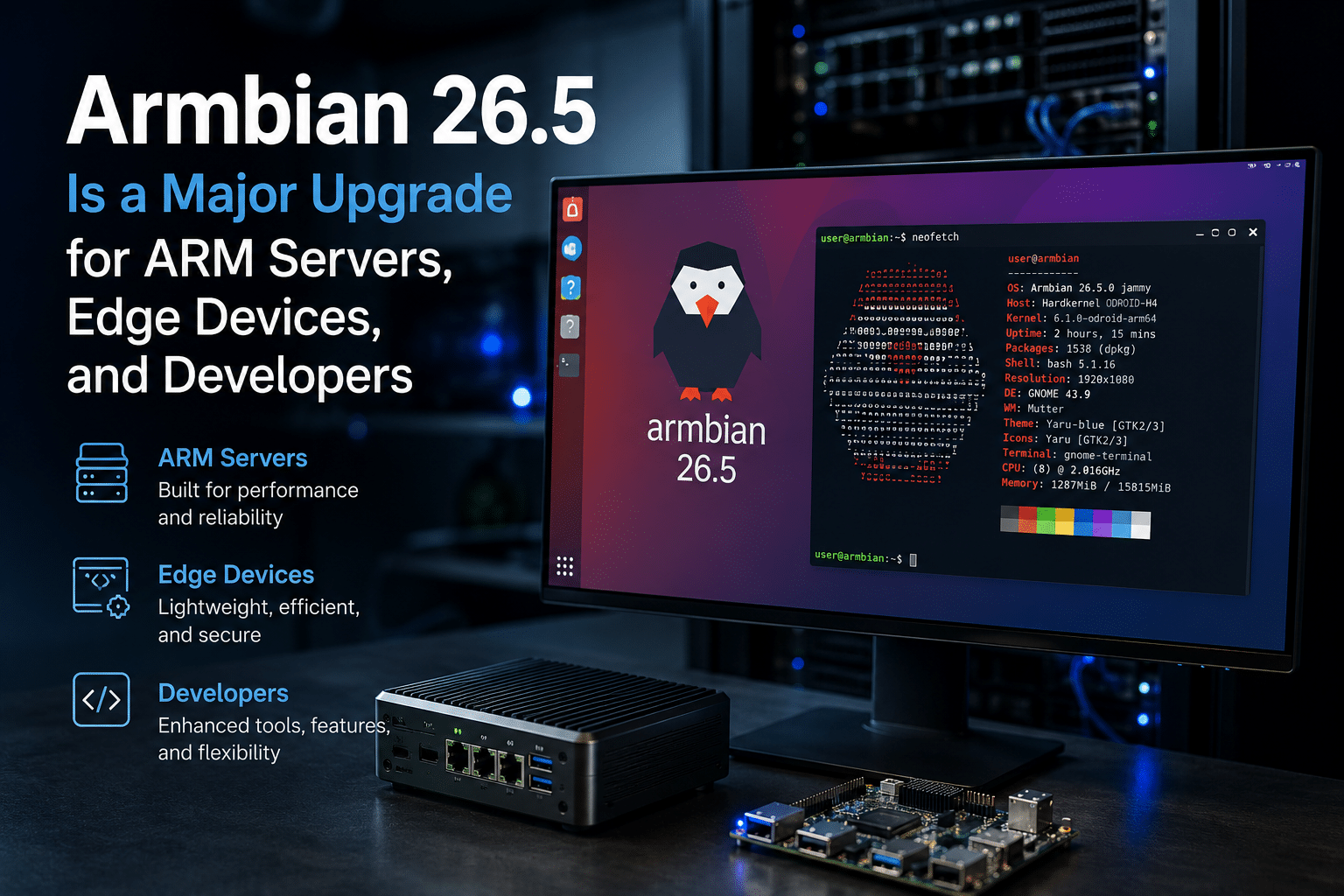
The ARM ecosystem is undergoing a profound transformation. What was once considered an architecture primarily suited for smartphones and embedded devices has evolved into a foundation for modern cloud computing, AI inference, industrial automation, networking appliances, and edge infrastructure.
Major cloud providers now offer ARM-powered instances. Enterprise software vendors increasingly support ARM64 workloads. Kubernetes distributions run seamlessly on ARM clusters. AI frameworks are being optimized for ARM processors. Meanwhile, organizations continue seeking ways to reduce power consumption without sacrificing performance.
Against this backdrop, the release of Armbian 26.5 arrives at a critical moment.
Featuring Linux 7.0 kernel support, Ubuntu 26.04 LTS builds, expanded hardware compatibility, improved firmware integration, and ongoing infrastructure modernization, Armbian 26.5 is more than a routine operating system update. It represents another step toward making ARM deployments production-ready across a wide range of environments.
For developers, system administrators, DevOps engineers, and infrastructure architects, this release offers tangible benefits that affect performance, maintainability, security, and scalability.
In this article, we’ll examine why Armbian 26.5 is an important release, what Linux 7.0 brings to ARM computing, how Ubuntu 26.04 LTS enhances long-term stability, and why businesses building ARM-powered infrastructure should pay close attention.
The Growing Importance of ARM Infrastructure
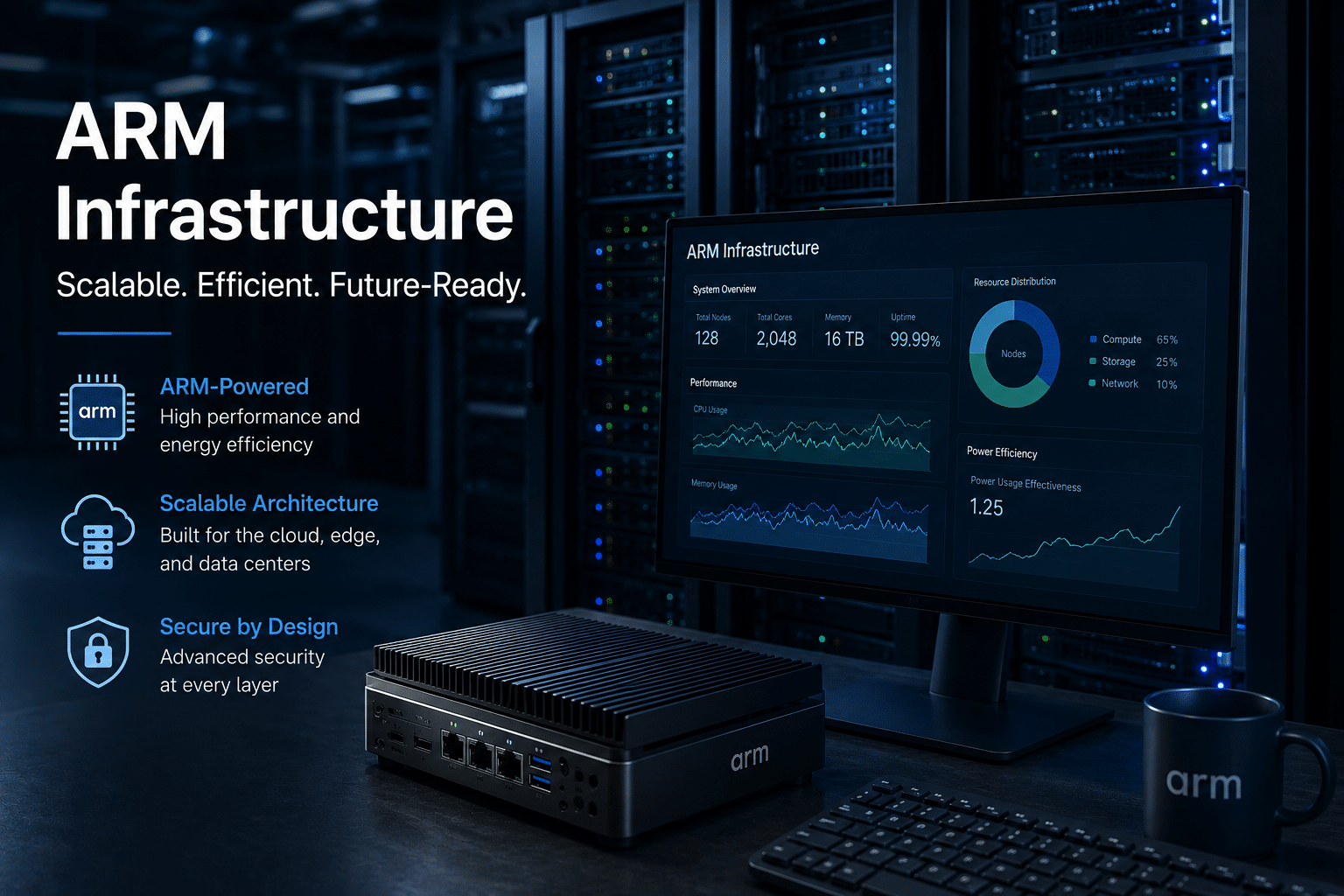
Before diving into Armbian itself, it’s important to understand why ARM matters more than ever.
Over the last decade, several trends have converged:
- Rising energy costs
- Increased cloud computing demand
- Edge computing expansion
- AI inference workloads
- Sustainability initiatives
- Hardware diversification strategies
Traditional x86 servers remain dominant, but ARM has become increasingly attractive because it delivers exceptional performance-per-watt.
In large-scale environments, power consumption directly affects:
- Data center operating costs
- Cooling requirements
- Rack density
- Environmental impact
- Infrastructure scalability
Organizations deploying thousands of nodes often discover that efficiency gains of even 10–20% can translate into substantial annual savings.
This explains why ARM adoption continues accelerating across:
- Cloud platforms
- Edge deployments
- Telecom infrastructure
- Industrial IoT
- Smart city projects
- Content delivery networks
- AI inference clusters
Armbian exists at the intersection of these trends.
What Makes Armbian Different?
Many Linux distributions support ARM processors.
However, Armbian focuses specifically on delivering optimized operating systems for ARM devices while addressing challenges commonly found in vendor-provided images.
Key advantages include:
Consistent User Experience
Armbian provides a standardized Linux environment across diverse hardware platforms.
Developers can move between boards without constantly adapting to different vendor customizations.
Better Kernel Management
Instead of relying entirely on manufacturer kernels, Armbian maintains tested kernel branches with regular updates and security fixes.
Enhanced Stability
Many vendor images prioritize basic functionality over long-term reliability.
Armbian emphasizes production readiness.
Broad Hardware Support
The distribution supports hundreds of ARM devices from multiple vendors, reducing fragmentation throughout the ecosystem.
These advantages become increasingly valuable as organizations scale ARM deployments.
Linux 7.0: The Foundation of Armbian 26.5
The most significant technical upgrade in Armbian 26.5 is support for Linux 7.0.
While kernel version numbers alone do not tell the full story, Linux 7.0 introduces improvements that directly impact real-world deployments.
Scheduler Enhancements
Modern ARM systems frequently contain:
- Multiple CPU clusters
- Heterogeneous cores
- High core counts
- Specialized processing units
Efficient scheduling becomes critical.
Linux 7.0 introduces refinements that improve:
- Task placement
- CPU utilization
- Context switching
- Load balancing
For ARM servers running containers and microservices, these improvements can increase overall system efficiency.
Memory Management Improvements
Memory performance often determines application responsiveness.
Linux 7.0 includes updates affecting:
- NUMA handling
- Page allocation
- Memory reclamation
- Cache efficiency
Benefits include:
- Lower latency
- Better throughput
- Improved container density
- More predictable workload behavior
These enhancements are especially valuable for Kubernetes environments.
Networking Optimizations
Networking remains a primary bottleneck for many edge deployments.
Linux 7.0 improves various subsystems affecting:
- Packet processing
- Network drivers
- Virtual networking
- Traffic management
For organizations running:
- API gateways
- Edge nodes
- VPN appliances
- CDN infrastructure
network efficiency can significantly impact performance.
Storage Performance Enhancements
Storage workloads continue evolving rapidly.
Linux 7.0 introduces improvements affecting:
- EXT4
- Btrfs
- XFS
- NVMe optimization
Benefits include:
- Faster I/O operations
- Improved filesystem reliability
- Better SSD utilization
- Reduced storage latency
These gains matter for both cloud workloads and edge deployments.
Ubuntu 26.04 LTS: Enterprise Stability Arrives
A major highlight of Armbian 26.5 is support for Ubuntu 26.04 LTS.
For businesses, long-term support matters.
Infrastructure teams prioritize:
- Predictability
- Security updates
- Vendor support
- Operational consistency
Ubuntu LTS releases provide years of maintenance and security patches.
This makes them ideal for:
- Production servers
- Industrial systems
- Network appliances
- Edge gateways
By integrating Ubuntu 26.04 LTS, Armbian provides organizations with a trusted enterprise foundation while maintaining hardware flexibility.
Expanded Hardware Support
One of Armbian’s greatest strengths is broad hardware compatibility.
Armbian 26.5 expands support across multiple platforms.
This matters because hardware diversity remains a challenge within the ARM ecosystem.
Unlike x86 systems, ARM vendors frequently customize:
- Boot processes
- Device trees
- Firmware
- Drivers
Without a unified platform, managing deployments becomes difficult.
Armbian reduces this complexity by creating a more consistent experience across supported devices.
For organizations managing large fleets of ARM systems, this translates into:
- Lower operational overhead
- Faster deployments
- Reduced troubleshooting
- Simplified updates
Edge Computing Benefits
Edge computing continues growing rapidly.
Analysts project billions of connected devices generating enormous volumes of data.
Sending all data to centralized cloud platforms introduces challenges:
- Latency
- Bandwidth costs
- Privacy concerns
- Reliability limitations
Processing data closer to its source solves many of these issues.
Armbian 26.5 strengthens edge deployments through:
Improved Hardware Compatibility
Organizations can deploy a wider range of hardware.
Better Driver Support
Reliable connectivity is essential at the edge.
Updated Wireless Firmware
Modern wireless standards require robust firmware support.
Enhanced Stability
Remote edge devices often operate unattended for months.
System reliability becomes essential.
Why Developers Should Care
Developers are among the biggest beneficiaries of Armbian 26.5.
Better Development Consistency
Modern development workflows often span:
- Laptops
- Cloud servers
- Containers
- Edge devices
Armbian helps create consistent environments throughout the deployment pipeline.
Improved Container Support
Containers have become the standard deployment model.
Linux 7.0 improvements benefit:
- Docker
- Podman
- Kubernetes
- containerd
This makes ARM-based development environments more practical than ever.
Faster Testing Cycles
Developers can validate ARM-specific applications before production deployment.
This reduces surprises during rollout.
The Role of ARM in AI and Machine Learning
AI is becoming increasingly distributed.
Instead of sending every inference request to centralized cloud systems, organizations increasingly perform inference at the edge.
Examples include:
- Video analytics
- Industrial monitoring
- Retail systems
- Smart cities
- Autonomous devices
ARM processors are well suited to these workloads because they combine efficiency with growing computational capability.
Armbian provides the operating system layer needed to support these deployments.
Security Improvements
Security remains a top concern for modern infrastructure.
Armbian 26.5 benefits from:
- Updated kernel security patches
- Improved firmware maintenance
- Modern package repositories
- Long-term Ubuntu support
Organizations deploying internet-facing systems should view these improvements as essential rather than optional.
How HOMERDP Complements ARM Development Workflows
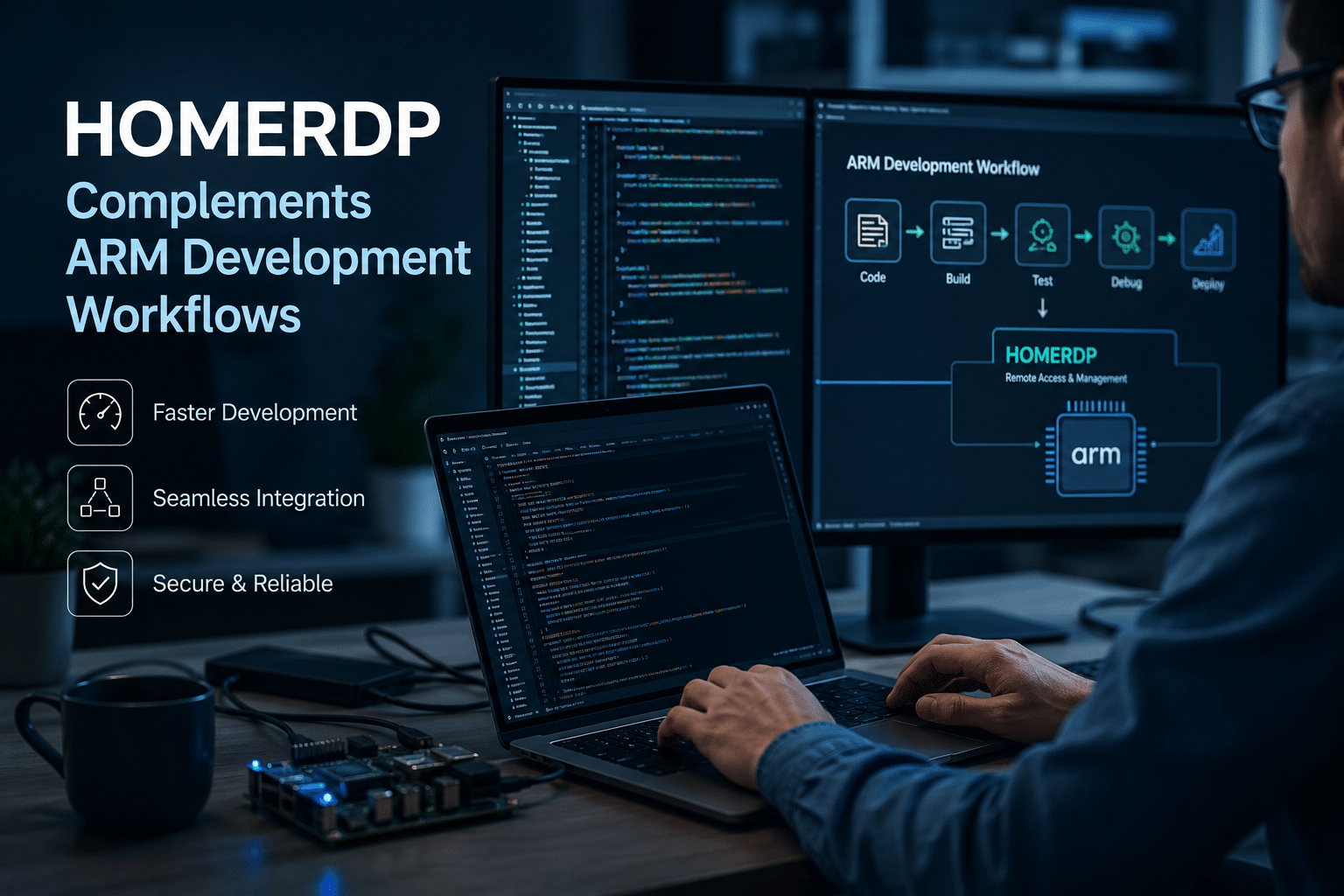
While Armbian powers ARM hardware deployments, organizations still need infrastructure for development, testing, CI/CD, staging, and management.
This is where HOMERDP becomes valuable.
Many teams follow a workflow like this:
Stage 1: Development
Developers build applications on Linux VPS instances hosted by HOMERDP.
These environments provide:
- Root access
- Flexible resource allocation
- Linux compatibility
- Development toolchains
Stage 2: Continuous Integration
Teams run automated testing pipelines using HOMERDP cloud infrastructure.
Benefits include:
- Repeatable builds
- Faster deployment validation
- Automated quality assurance
Stage 3: Staging
Applications are tested under production-like conditions.
Dedicated servers from HOMERDP can simulate larger deployment environments before release.
Stage 4: Production Deployment
Validated applications are deployed onto Armbian-powered ARM devices operating at the edge.
This creates a practical bridge between cloud development and distributed ARM infrastructure.
Why VPS Hosting Remains Critical for ARM Projects
Many organizations assume ARM development requires ARM hardware from day one.
In reality, much of the software lifecycle occurs before deployment.
Developers need environments for:
- Coding
- Testing
- Packaging
- Monitoring
- CI/CD
HOMERDP VPS solutions provide a cost-effective platform for these activities.
This allows teams to accelerate development while maintaining flexibility.
Future Outlook: ARM Everywhere
Several trends suggest ARM adoption will continue accelerating:
Cloud Expansion
More ARM-based cloud instances are becoming available.
AI Growth
Inference workloads increasingly favor energy-efficient architectures.
Edge Computing Adoption
Distributed computing continues expanding worldwide.
Sustainability Requirements
Organizations seek lower-power infrastructure solutions.
Armbian is positioned to benefit from each of these trends.
Final Thoughts
Armbian 26.5 represents a significant advancement for the ARM ecosystem.
Linux 7.0 support delivers meaningful performance and efficiency improvements. Ubuntu 26.04 LTS strengthens enterprise readiness. Expanded hardware support reduces fragmentation. Updated firmware and networking enhancements improve reliability.
Together, these upgrades make Armbian 26.5 an attractive platform for servers, edge devices, IoT systems, AI workloads, and developer environments.
For organizations building modern ARM infrastructure, success depends not only on the operating system but also on the surrounding ecosystem.
Armbian provides the software foundation. HOMERDP provides the VPS hosting, cloud resources, and dedicated server infrastructure required to develop, test, automate, and scale workloads efficiently.
As ARM adoption continues its rapid growth across cloud and edge computing, Armbian 26.5 demonstrates that open-source Linux remains one of the strongest enablers of innovation in the next generation of infrastructure.
EXPLORE MORE ; Why LXC & Docker Outperform Traditional VMs on HOMERDP

READ OUR BLOGS