

Why antiX 26 is Perfect for GPU RDP Servers in 2026
A Deep Dive into the Latest Systemd-Free Debian 13 Powerhouse
The Linux ecosystem in 2026 is evolving rapidly—but not every advancement is about adding complexity. In fact, one of the most powerful innovations this year comes from going in the opposite direction: removing unnecessary overhead.
Enter antiX 26, the latest release of the lightweight, systemd-free Linux distribution built on Debian. Designed for speed, flexibility, and efficiency, antiX 26 is not just another distro update—it is a performance-focused solution for modern computing environments, especially GPU-powered Remote Desktop Protocol (RDP) servers.
In this detailed guide, we explore what makes antiX 26 revolutionary and why it pairs perfectly with high-performance GPU RDP platforms like HOMERDP.
antiX 26 Released: What’s New?
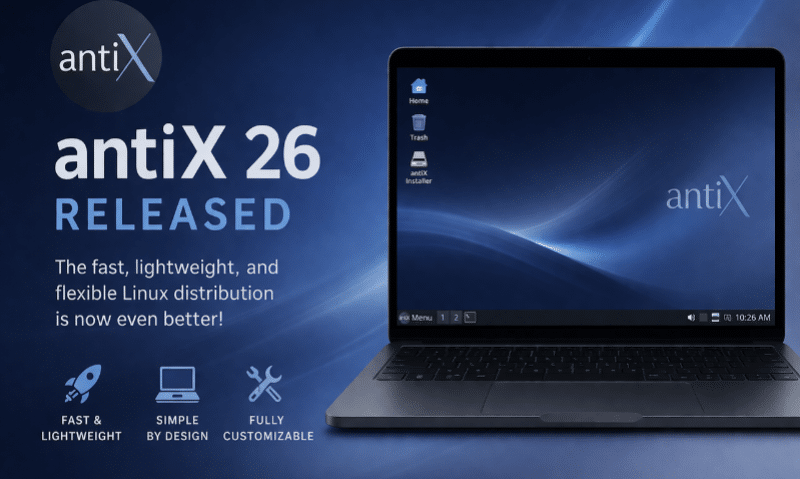
The release of antiX 26 marks a significant milestone in lightweight Linux development.
- Released on March 21, 2026
- Built on Debian 13
- Completely systemd-free and elogind-free
- Supports both 32-bit and 64-bit architectures
antiX has always focused on efficiency over bloat, and version 26 takes this philosophy further with modern innovations while maintaining its minimal footprint.
Key Features of antiX 26
1. Multi-Init System Architecture (First of Its Kind)
One of the biggest breakthroughs in antiX 26 is its multi-init system support.
Included init systems:
- runit (default)
- sysVinit
- dinit
- s6-rc
- s6-66
Unlike traditional Linux distributions that lock users into a single init system, antiX 26 allows users to choose their init system at boot time.
Why this matters:
- Fine-tuned control over system processes
- Faster boot times
- Reduced background services
- Better optimization for specific workloads
For RDP servers, this means maximum efficiency with minimal system interference.
2. Debian 13 Base: Stability Meets Modern Performance
antiX 26 is built on Debian 13, ensuring:
- Updated packages and libraries
- Long-term stability
- Improved hardware compatibility
This combination gives users the best of both worlds:
- Stability of Debian
- Performance of a minimal OS
3. Ultra-Lightweight Design
antiX has always been known for its minimal resource usage—and version 26 continues that legacy.
- Runs smoothly on low RAM systems (~512MB)
- Extremely low CPU overhead
- Fast boot and shutdown times
According to official sources, antiX is designed to be a fast, lightweight, systemd-free distribution suitable for both old and new hardware .
This is exactly what modern cloud and RDP environments demand.
4. Lightweight Window Managers Instead of Heavy DEs
antiX avoids heavy desktop environments like GNOME or KDE and instead offers:
- IceWM (default)
- Fluxbox
- JWM
- herbstluftwm
Benefits:
- Lower RAM usage
- Faster UI rendering
- Reduced GPU load for non-essential visuals
Perfect for remote desktops where performance > aesthetics.
5. Flexible Editions for Every Use Case
antiX 26 offers:
🔹 Full Edition
- GUI + apps + LibreOffice
- Ideal for general users
🔹 Core Edition
- CLI-based minimal system
- Maximum control and customization
For RDP and cloud deployments, the Core version is a game-changer.
6. Live USB & Portable OS Capability
antiX supports:
- Live booting
- Persistent storage
- Full OS on USB
This enables:
- Portable dev environments
- Instant RDP node deployment
- Disaster recovery systems
Why antiX 26 is Perfect for GPU RDP Servers
Now let’s connect the dots—why is antiX 26 ideal for GPU RDP environments like HOMERDP?
1. Minimal OS Overhead = Maximum GPU Performance
In GPU RDP setups:
- Every CPU cycle matters
- Every MB of RAM impacts performance
antiX:
- Eliminates systemd overhead
- Reduces background processes
Result:
More resources available for GPU-intensive tasks like AI, rendering, and browser acceleration
2. Faster Boot = Faster Deployment
antiX boots significantly faster than traditional distros.
In RDP environments:
- Spin up instances quickly
- Reduce downtime
- Enable rapid scaling
This is crucial for:
- DevOps pipelines
- On-demand GPU workloads
3. Better Resource Allocation in Virtual Machines
Cloud environments rely heavily on virtualization.
antiX enables:
- Smaller VM images
- Lower memory consumption
- Higher density of instances per server
With HOMERDP, this translates to:
- Running more GPU RDP sessions per machine
- Reduced infrastructure costs
4. Enhanced Stability for Long Sessions
RDP sessions often run for hours or days.
antiX’s simplicity ensures:
- Fewer system crashes
- Reduced dependency conflicts
- Stable long-running sessions
5. Ideal for AI, ML, and Data Science Workloads
antiX + GPU RDP is perfect for:
- Python environments
- TensorFlow / PyTorch
- CUDA-based workloads
Because:
- Less OS overhead = more compute power
- Faster execution cycles
How HOMERDP Unlocks antiX 26’s Full Potential
When you combine antiX 26 with HOMERDP’s GPU-powered infrastructure, you create a high-performance remote computing ecosystem.
1. GPU Acceleration at Scale
HOMERDP provides:
- High-end GPU servers
- Optimized remote access
antiX ensures:
- Minimal OS interference
- Maximum GPU utilization
Perfect for:
- AI model training
- 3D rendering
- Video processing
2. Low-Latency Remote Experience
antiX’s lightweight UI + HOMERDP’s optimized network stack:
Deliver:
- Smooth remote desktop experience
- Reduced lag
- Faster input response
3. Cost Optimization
Because antiX uses fewer resources:
- Lower RAM usage
- Smaller storage footprint
With HOMERDP:
- Run more users per server
- Reduce cloud costs
- Increase ROI
4. Developer-Friendly Environment
Developers benefit from:
- Full control over init systems
- Minimal OS interference
- Faster testing cycles
Ideal for:
- DevOps
- Cloud-native apps
- Remote development labs
antiX 26 vs Traditional Linux Distros for RDP
| Feature | antiX 26 | Ubuntu (GNOME) |
|---|---|---|
| Systemd | ❌ No | ✅ Yes |
| RAM Usage | Very Low | High |
| Boot Speed | Fast | Moderate |
| GPU Efficiency | High | Medium |
| RDP Performance | Excellent | Average |
antiX clearly dominates in remote-first architectures.
Real-World Use Cases
1. AI & ML Nodes
Run lightweight environments for:
- Model testing
- Data preprocessing
2. Browser Automation Farms
Use GPU acceleration for:
- Selenium
- Web scraping
- Testing environments
3. Remote Coding Labs
Perfect for:
- Students
- Developers
- Training environments
4. Legacy System Replacement
Replace old hardware with:
- antiX + HOMERDP cloud stack

The Future: Systemd-Free Computing in Cloud Era
antiX 26 highlights a growing trend:
Developers want:
- Simplicity
- Control
- Performance
Systemd-free distributions are becoming:
- Ideal for cloud-native workloads
- Efficient for edge computing
- Perfect for RDP optimization
Final Verdict
antiX 26 is not just a lightweight Linux distro—it is a strategic performance tool for 2026.
Why it stands out:
- Multi-init flexibility
- Debian 13 stability
- Ultra-low resource usage
- Systemd-free architecture
Why it’s perfect for GPU RDP:
- Maximizes GPU performance
- Reduces latency
- Optimizes cost
EXPLORE MORE ; RDP for AI Engineers: Why Cloud GPUs Are the Future of Machine Learning

READ OUR BLOGS