

From Crysis to GTA IV: Games That Broke Our PCs
PC gaming has always evolved alongside hardware innovation. Every few years, a title arrives that doesn’t just entertain us — it exposes the limits of our machines. It makes our GPUs scream, our CPUs sweat, and our RAM beg for mercy.

From Crysis to Grand Theft Auto IV, several games didn’t just raise the bar — they shattered it. They forced millions of gamers to upgrade their PCs, invest in better graphics cards, increase RAM, or move to faster storage.
But today, in 2026, there’s a smarter way to handle hardware-breaking games — without constantly rebuilding your PC. Let’s explore the games that changed everything and how modern solutions like HOMERDP’s GPU Dedicated Servers offer a scalable alternative.
1. Crysis
When Crysis launched in 2007, it wasn’t just a game — it became a hardware benchmark.
The question “Can it run Crysis?” turned into a cultural meme in the PC community.

Why Crysis Destroyed PCs
- Advanced real-time lighting and shadow rendering
- High-resolution textures
- Massive draw distances
- Dense foliage simulation
- Demanding physics engine
Even high-end GPUs at launch struggled to maintain stable 60 FPS on maximum settings.
At the time:
- NVIDIA’s 8800 GTX was considered top-tier.
- Many gamers upgraded from dual-core CPUs to quad-core processors.
- RAM jumped from 2GB to 4GB in many systems.
Crysis didn’t just demand power — it anticipated future hardware.
2. Grand Theft Auto IV
When Grand Theft Auto IV launched on PC in 2008, players expected smooth open-world chaos. Instead, they got one of the most hardware-demanding ports of its time.

Why GTA IV Forced Upgrades
- Massive open-world streaming
- Heavy CPU dependency
- Poor initial optimization
- VRAM-heavy texture usage
- Dynamic AI traffic and pedestrian systems
Many players reported:
- 30–40 FPS on mid-range hardware
- Severe stuttering due to RAM bottlenecks
- High CPU usage even on strong processors
Gamers upgraded:
- From 2GB to 4GB or 8GB RAM
- From older GPUs to newer GTX series cards
- From HDDs to faster drives for better streaming
GTA IV proved something important: open-world simulation requires serious computational power.
3. Half-Life 2 —
Before Crysis, Half-Life 2 introduced players to advanced physics simulations through the Source engine.
The Gravity Gun wasn’t just fun — it was a hardware test.

What Made It Demanding
- Real-time physics calculations
- Advanced AI behaviors
- Complex level interactions
It pushed gamers toward:
- Better CPUs
- Dedicated GPUs instead of integrated graphics
- More RAM
It marked the transition from “basic rendering” to simulation-heavy gaming.
The Rise of Open Worlds and Simulation Engines
As gaming evolved, realism became the goal.
Modern titles incorporate:
- Real-time ray tracing
- 4K texture packs
- Procedural environments
- Advanced particle systems
- AI-driven NPC ecosystems
Each innovation increases:
- GPU VRAM requirements
- CPU thread utilization
- Storage read speeds
- Cooling demands
Hardware cycles accelerated.
Where gamers once upgraded every 5–6 years, many now feel pressured to upgrade every 2–3 years.
The Cost of Chasing Performance
Let’s look at modern upgrade economics.
Average GPU Costs (Recent Years)
- Mid-range GPUs: $300–$500
- High-end GPUs: $700–$1500
- Flagship GPUs: $1500+
Add to that:
- 32GB RAM upgrades
- NVMe SSD storage
- Better cooling systems
- Higher wattage PSUs
A single “upgrade cycle” can easily cost over $2000.
And yet — within 2–3 years, another demanding title arrives.
The cycle repeats.
Enter the Smarter Alternative: Remote GPU Power
Instead of continuously upgrading physical hardware, many gamers and developers are exploring remote GPU-powered environments.
This is where solutions like HOMERDP’s GPU Dedicated Servers transform the game.
Rather than buying expensive GPUs every few years, users can:
- Access high-performance CPUs and GPUs remotely
- Scale resources when needed
- Run demanding games or simulations
- Test mods and builds in high-spec environments
- Stream gameplay smoothly
How HOMERDP Solves the “Crysis Problem”
The “Crysis problem” represents a simple reality:
Games will always demand more power than most systems have.
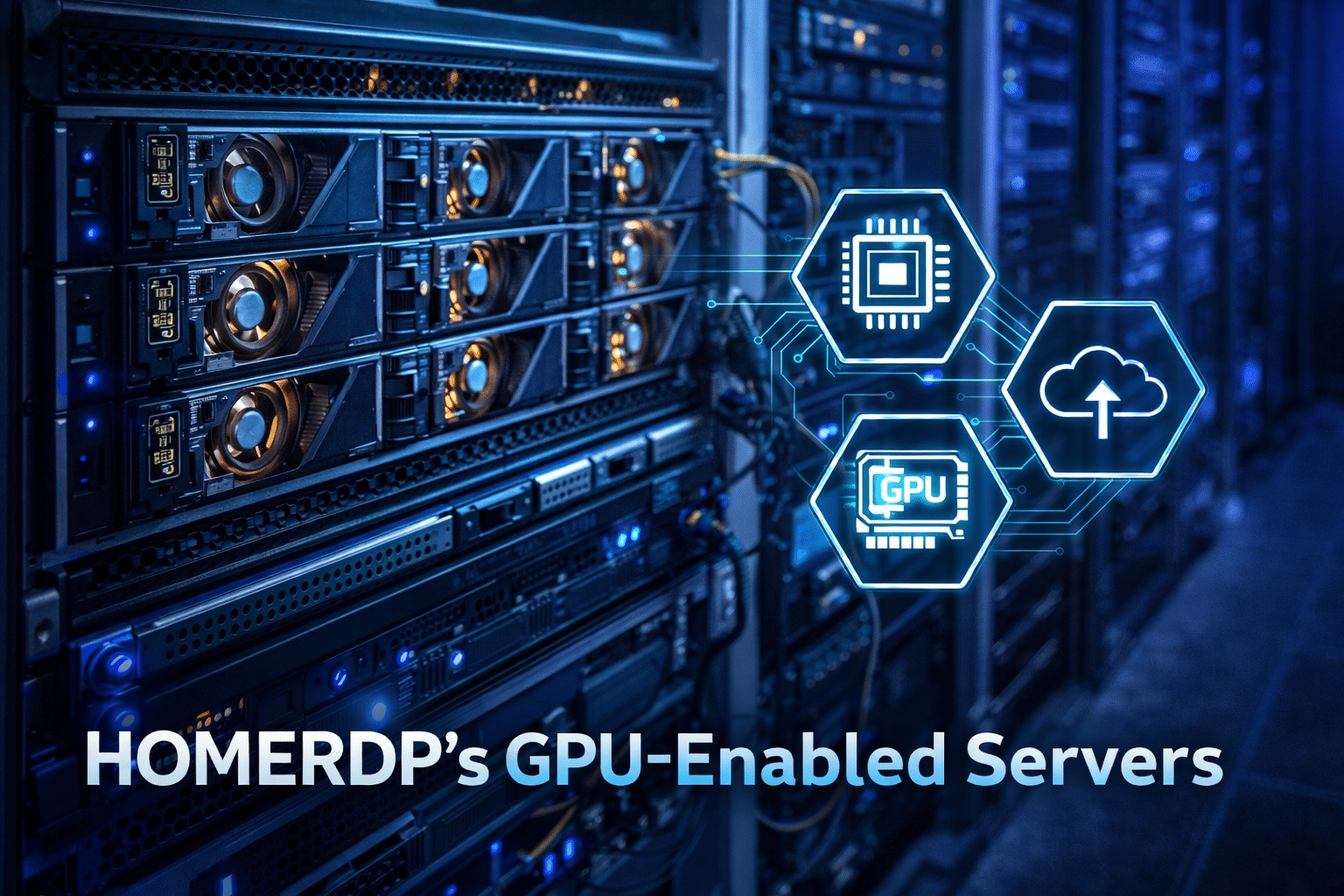
HOMERDP’s GPU-enabled servers address this by offering:
High-End Compute Access
Instead of relying on local GPUs, users connect to powerful remote machines capable of handling:
- Graphics-heavy rendering
- Simulation-driven gameplay
- Development testing
- Modding environments
Scalable Performance
Need more RAM? More CPU threads? Higher GPU capability?
You scale up — without opening your PC cabinet.
Cost Efficiency
Instead of spending thousands on new hardware:
- Pay for performance when you need it
- Avoid depreciation
- Eliminate upgrade cycles
Stability & Flexibility
You can:
- Play from lightweight laptops
- Work from multiple devices
- Maintain consistent performance
Beyond Gaming — Creators & Developers Benefit Too
The same games that break PCs also push:
- Streamers
- Game modders
- Indie developers
- 3D artists
- Video editors
Rendering high-resolution gameplay or testing physics-heavy builds demands serious horsepower.
With HOMERDP:
- Developers can test builds in high-spec environments.
- Streamers can offload encoding tasks.
- Mod creators can experiment without risking local crashes.
The Bigger Picture: Gaming Drives Innovation
Historically, games have shaped hardware evolution:
- Crysis drove GPU upgrades.
- GTA IV exposed CPU limitations.
- Physics engines forced better processors.
- Open worlds increased RAM requirements.
Gaming pushes the tech industry forward.
But now, innovation isn’t just about buying more hardware — it’s about accessing smarter infrastructure.
The Shift from Ownership to Access
We’ve seen this shift in:
- Music (streaming vs CDs)
- Movies (streaming vs DVDs)
- Software (SaaS vs boxed software)
Gaming and computing are following the same path.
Instead of owning the most powerful hardware, users now prioritize:
- Accessibility
- Scalability
- Performance on demand
Remote GPU-powered RDP environments represent this evolution.
Final Thoughts: Crysis to GTA IV
In the past, we asked:
“Can my PC run this game?”
In the future, we’ll ask:
“Can my infrastructure scale for this game?”
From Crysis to GTA IV, history proves one thing:
Games will always push boundaries.

But instead of chasing hardware every few years, solutions like HOMERDP’s GPU Dedicated Servers allow gamers, creators, and developers to stay ahead — without constant upgrades.
Performance no longer depends solely on what sits under your desk.
It depends on what you can access.
And that changes everything.
EXPLORE MORE; Why Gamers and Developers Will Love the New System76 Linux Powerhouse

READ OUR BLOGS