

Why Vibe Coding Is the Future of Learning to Code
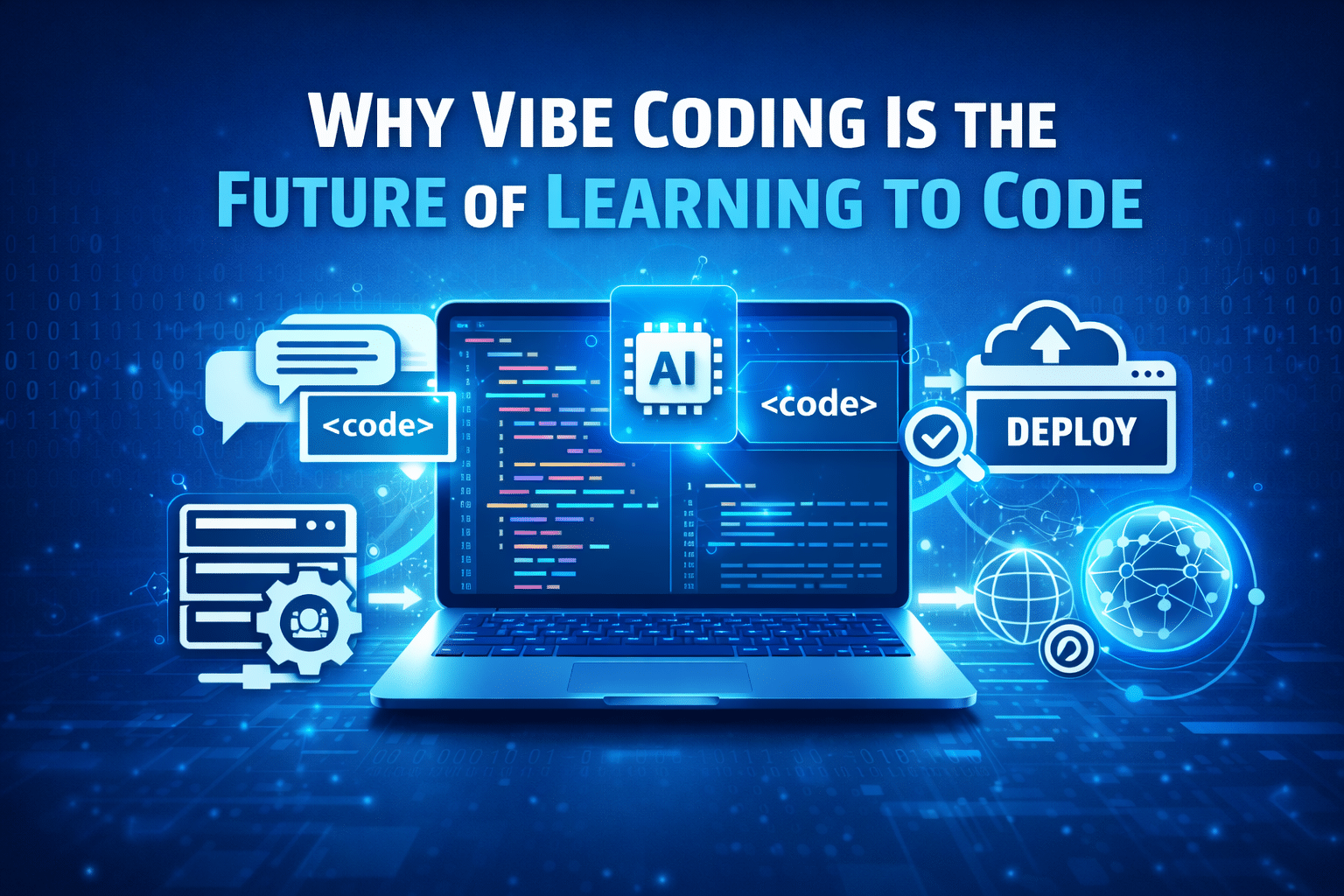
The way we learn programming is changing faster than ever. For decades, aspiring developers followed a predictable path: enroll in a course, watch hours of lectures, read documentation, complete assignments, and slowly build confidence. Today, a new approach is gaining momentum — vibe coding.
Vibe coding shifts the focus from memorizing syntax to building real projects with AI assistance. Instead of struggling for hours over small errors, learners describe what they want in natural language, collaborate with AI to generate code, test it, refine it, and repeat the cycle.
This is not about replacing learning — it is about accelerating it.
In this article, we explore why vibe coding represents the future of programming education, how it works, where it fits in professional development, and why pairing it with high-performance infrastructure like HOMERDP creates a powerful learning ecosystem.
What Is Vibe Coding?
Vibe coding is an AI-assisted development approach where programmers:
- Describe a feature or project in plain language
- Let AI generate a code draft
- Review and refine the output
- Test, debug, and improve
- Iterate quickly
Instead of spending weeks understanding theory before building something useful, learners jump straight into creation.
For example, instead of manually writing every line for a login system, a learner can say:
“Create a secure login system in Python Flask with hashed passwords and SQLite.”
AI generates the base. The learner then:
- Studies the structure
- Understands how authentication works
- Tests edge cases
- Modifies logic
- Improves security
This active experimentation builds understanding faster than passive course consumption.
Why Traditional Coding Education Often Fails
Let’s be honest. Many coding courses fail learners because:
1. Too Much Theory, Too Little Practice
Students memorize syntax without context.
2. Slow Feedback Loops
When stuck, beginners may spend hours debugging minor issues.
3. Low Motivation
Watching tutorials rarely creates the excitement of building something real.
4. Outdated Curriculum
Technology evolves rapidly, but many courses lag behind.
Vibe coding solves these issues by making learning interactive, fast, and project-based.
The Cognitive Advantage of AI-Assisted Learning
Research in educational psychology shows that active engagement improves retention. When learners experiment, make mistakes, and refine solutions, their understanding deepens.
Vibe coding creates:
- Immediate feedback
- Continuous experimentation
- Low barrier to starting
- High creative momentum
Instead of quitting after encountering errors, learners adjust prompts, regenerate code, and continue building.
The result? Increased confidence and faster skill acquisition.
The Speed Factor: Why Momentum Matters
Momentum is critical in learning programming.
Traditional approach:
- Write code
- Encounter error
- Search online
- Read Stack Overflow
- Try fix
- Repeat
Vibe coding approach:
- Write prompt
- Get solution draft
- Test
- Refine
The iteration cycle becomes dramatically shorter.
Shorter cycles = more practice.
More practice = better understanding.
Does Vibe Coding Replace Fundamentals?
No — and it shouldn’t.
The future belongs to a hybrid model:
- Use AI to accelerate building
- Use testing to validate logic
- Study concepts to deepen understanding
Smart learners use AI as a mentor, not a crutch.
They ask:
- Why did AI choose this data structure?
- Is this algorithm efficient?
- Is this secure?
- Can I optimize this?
This questioning mindset transforms AI from shortcut to learning amplifier.
Where Infrastructure Becomes Critical
As learners move from small scripts to real applications, they need:
- More RAM
- Faster CPUs
- Stable environments
- Ability to run databases
- Ability to deploy test servers
- Cloud-based accessibility
Local laptops often become bottlenecks.
This is where HOMERDP becomes strategically powerful.
Why HOMERDP Complements Vibe Coding
High-performance remote desktop and VPS environments allow learners to:
1. Run Heavy IDEs Without Lag
AI-powered IDEs and development environments can consume significant resources. HOMERDP’s scalable RDP solutions ensure smooth performance.
2. Experiment Without Risk
Learners can test configurations, run servers, and deploy apps without affecting their local system.
3. Access Development From Anywhere
Students can connect to their development environment from any device.
4. Scale As Projects Grow
As applications become complex, users can upgrade compute resources easily.
5. Maintain Professional Workflow
Version control, CI/CD testing, Docker containers — all run efficiently on high-performance VPS infrastructure.
When vibe coding meets scalable infrastructure, experimentation becomes limitless.
Practical Workflow: Vibe Coding + HOMERDP
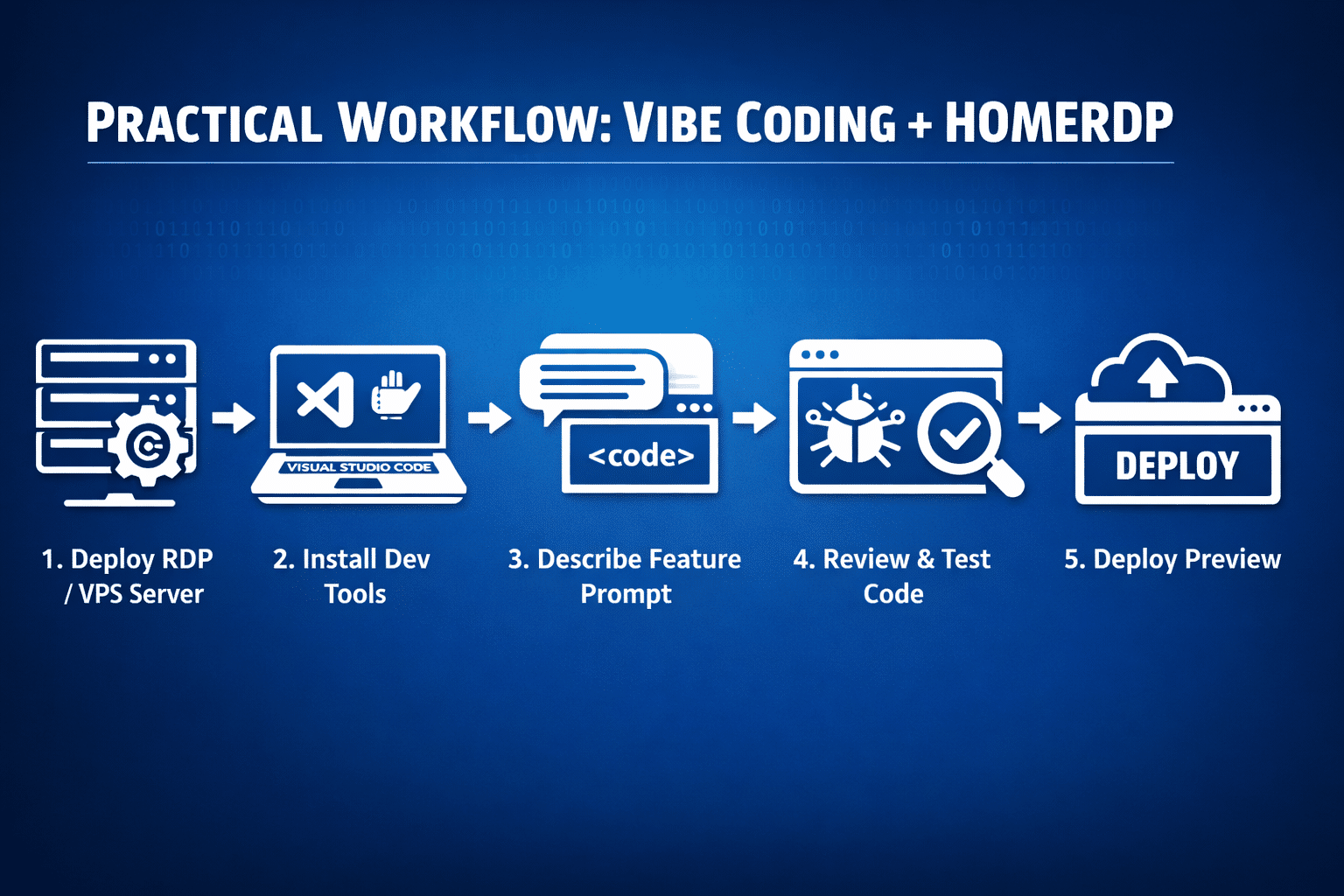
Here’s a professional workflow modern learners can follow:
- Deploy a high-performance RDP instance on HOMERDP.
- Install development tools (VS Code, Docker, Node, Python, etc.).
- Open AI coding assistant.
- Describe desired feature.
- Review generated code.
- Run tests locally on remote server.
- Optimize and refactor.
- Deploy preview environment.
This workflow mirrors how professional teams operate.
Real-World Use Cases
1. Beginners Learning Web Development
Build small web apps quickly and understand routing, APIs, and databases through experimentation.
2. AI & Machine Learning Enthusiasts
Run Python notebooks and train models on powerful remote infrastructure without hardware limitations.
3. Indie Developers
Prototype SaaS ideas rapidly.
4. Startup Founders
Validate MVP ideas quickly using AI-assisted coding.
5. Government Exam Aspirants Learning Tech Skills
Even students preparing for competitive exams can use vibe coding to build small tools and strengthen digital skills.
The Security Question
AI-generated code is powerful, but users must:
- Review logic
- Validate authentication flows
- Sanitize inputs
- Avoid blind deployment
Running development inside a secure, isolated VPS environment adds an extra layer of operational safety.
HOMERDP’s controlled remote environment ensures:
- Isolated development
- Secure remote access
- Controlled server configurations
Why 2026 and Beyond Belong to AI-Assisted Developers
The future job market rewards:
- Rapid prototyping ability
- Strong debugging skills
- System thinking
- Infrastructure awareness
- AI collaboration skills
Vibe coding teaches exactly that.
Developers who learn to guide AI effectively will outperform those who resist it.
The Mindset Shift
Old mindset:
“I must memorize everything before building.”
New mindset:
“I build first, then understand deeply.”
This shift accelerates growth dramatically.
Potential Risks — And How to Avoid Them
Risk 1: Overdependence
Solution: Manually rewrite parts of AI-generated code to reinforce learning.
Risk 2: Shallow Understanding
Solution: Study the underlying concepts after implementation.
Risk 3: Security Oversight
Solution: Run test suites and code reviews before production.
Risk 4: Infrastructure Limitations
Solution: Use scalable RDP/VPS platforms like HOMERDP.
The Hybrid Learning Framework
Here is the ideal modern approach:
- Use AI to scaffold projects.
- Break down generated code.
- Study the theory behind each module.
- Modify and extend functionality.
- Deploy in real environment.
- Monitor performance.
This creates both speed and depth.

Final Thoughts
Vibe coding is not a shortcut — it is a shift.
It transforms programming from a slow, syntax-heavy journey into an experimental, creative, momentum-driven experience.
When paired with high-performance remote infrastructure like HOMERDP, learners remove hardware barriers and gain the freedom to experiment at scale.
The future of learning to code belongs to those who:
- Build fast
- Learn continuously
- Validate thoroughly
- Scale confidently
AI is not replacing developers.
It is empowering the next generation to learn faster than ever before.
And those who combine intelligent AI collaboration with powerful development infrastructure will lead the software world of tomorrow.
EXPLORE MORE ; Why Smart Marketers Use RDP for Bulk Emailing & SMTP Management

READ OUR BLOGS