

CachyOS vs EndeavourOS
CachyOS vs EndeavourOS: Which Arch Distro Is Better for Developers and Cloud RDP?
Arch Linux has always attracted power users who value control, performance, and bleeding-edge software. However, its manual installation process and hands-on configuration often intimidate newcomers and slow down professionals who want to focus on productivity rather than setup. This is where Arch-based derivatives step in—and two names dominate the conversation in 2026: CachyOS and EndeavourOS.
Both distributions build on Arch Linux’s rolling-release model, but they follow very different philosophies. One prioritizes maximum performance out of the box, while the other delivers a near-vanilla Arch experience with simplicity and stability. Understanding these differences becomes even more important when you deploy Linux on remote workstations, cloud VPS environments, or RDP-based desktops such as those offered by HOMERDP.
This article delivers a deep, technical comparison of CachyOS vs EndeavourOS, focusing on performance, system design, real-world workloads, and remote deployment scenarios.
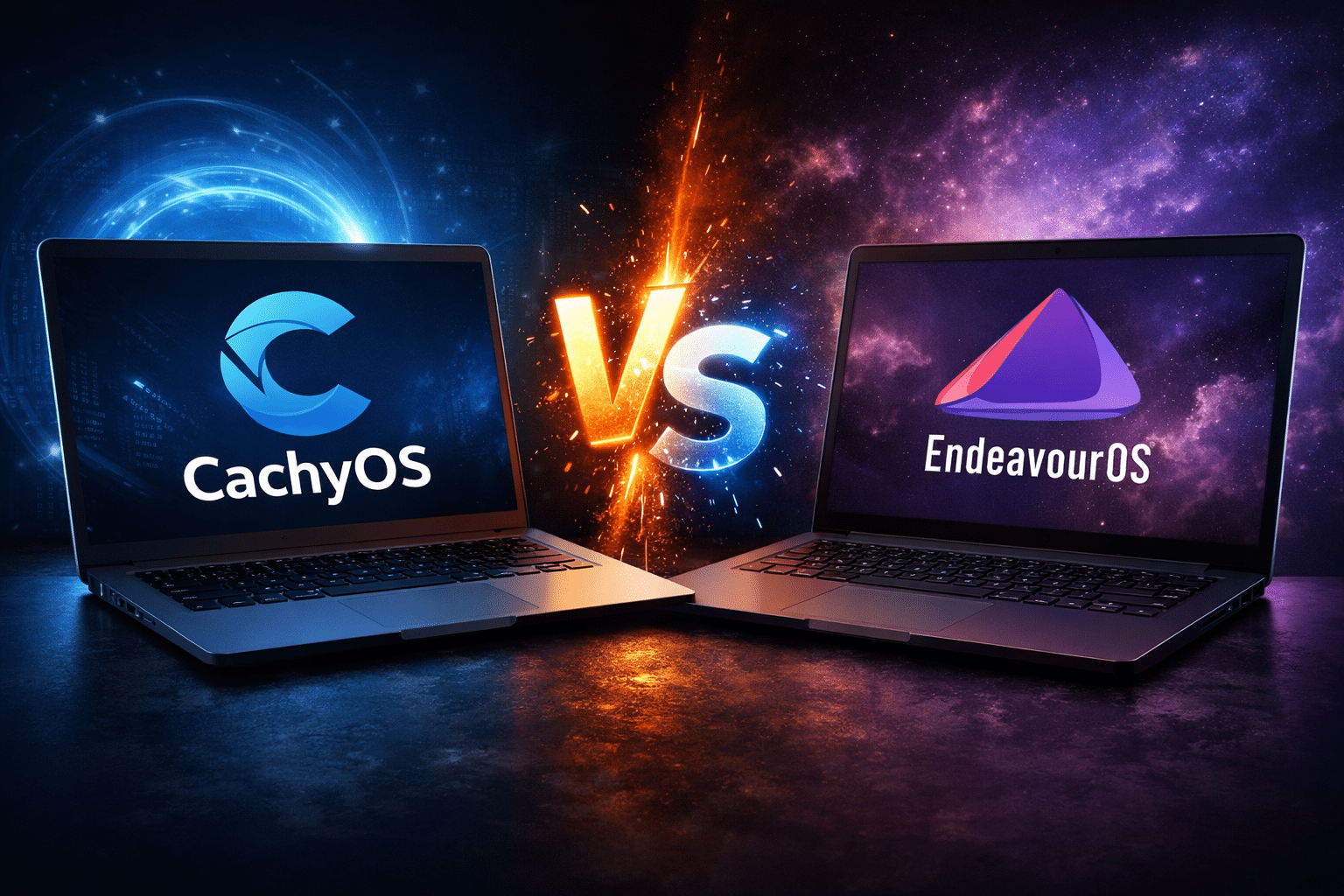
Understanding the Design Philosophy
EndeavourOS: Clean Arch, Minimal Opinionation
EndeavourOS positions itself as a gateway to Arch Linux. It removes the painful parts of Arch installation while preserving its core philosophy.
Key traits include:
- A vanilla Arch base with minimal preconfiguration
- No aggressive performance tuning by default
- Heavy reliance on upstream Arch repositories
- Community-driven development and documentation
EndeavourOS expects users to tune the system themselves. This approach appeals to developers, sysadmins, and Linux purists who want full transparency and predictable behavior.
CachyOS: Performance-First Arch Linux
CachyOS takes a different route. It asks a simple question: What if Arch Linux shipped already optimized?
CachyOS focuses on:
- Custom-compiled kernels optimized for modern CPUs
- Performance-tuned compiler flags across userland packages
- Advanced scheduler and memory management defaults
- Btrfs snapshots and rollback-friendly configurations
Instead of leaving optimization to the user, CachyOS builds it directly into the system.
Kernel and Performance Engineering
Kernel Optimization
Performance differences begin at the kernel level.
- CachyOS ships with custom kernels optimized for low latency and high throughput. It integrates scheduler tweaks and CPU-specific optimizations that benefit gaming, compiling, and multitasking workloads.
- EndeavourOS sticks to Arch’s standard kernel, prioritizing stability and upstream compatibility over aggressive tuning.
For users running remote Linux desktops on RDP, kernel responsiveness directly affects mouse latency, window redraw speed, and overall UI fluidity—areas where CachyOS clearly excels.
CPU and Compiler Flags
CachyOS compiles many packages using modern compiler optimizations, which:
- Improve execution speed
- Reduce instruction overhead
- Enhance responsiveness under load
EndeavourOS avoids such optimizations to maintain broad hardware compatibility.
On cloud VPS environments, especially those using modern AMD EPYC or Intel Xeon CPUs (like HOMERDP’s infrastructure), CachyOS extracts more raw performance from the same hardware.
Installation and Desktop Experience
Both distributions use the Calamares installer, offering online and offline installation modes. However, their post-install experience differs significantly.
Desktop Environments
Both support:
- KDE Plasma
- GNOME
- XFCE
- Cinnamon
- i3 and other window managers
CachyOS delivers desktops that feel immediately fast, with smoother animations and faster application launches. EndeavourOS provides a neutral starting point, requiring manual tuning for similar responsiveness.
For remote desktop sessions, lightweight desktops like XFCE or optimized KDE setups on CachyOS significantly reduce bandwidth usage and improve session stability.
Package Management and System Stability
Repository Strategy
- EndeavourOS relies almost entirely on official Arch repositories, ensuring maximum compatibility and predictable updates.
- CachyOS introduces its own repositories for optimized packages and kernels.
This difference matters in professional environments:
- EndeavourOS suits production systems where predictability matters.
- CachyOS suits performance-critical workstations, benchmarking labs, and development machines.
When deployed on HOMERDP Linux VPS or RDP servers, both distros remain stable—but CachyOS delivers faster execution for compute-heavy tasks like builds, rendering, and simulations.
Remote Workflows and Cloud Deployment
Why Arch-Based Distros Work Well on RDP
Modern Linux desktops have evolved. With Wayland improvements, better GPU acceleration, and efficient compositors, Arch-based distros now perform exceptionally well over RDP.
Using HOMERDP’s high-bandwidth, low-latency Linux RDP servers, users can:
- Run full KDE or GNOME desktops remotely
- Compile large projects without local hardware limits
- Maintain persistent development environments
- Access Linux from any device, anywhere
CachyOS on HOMERDP
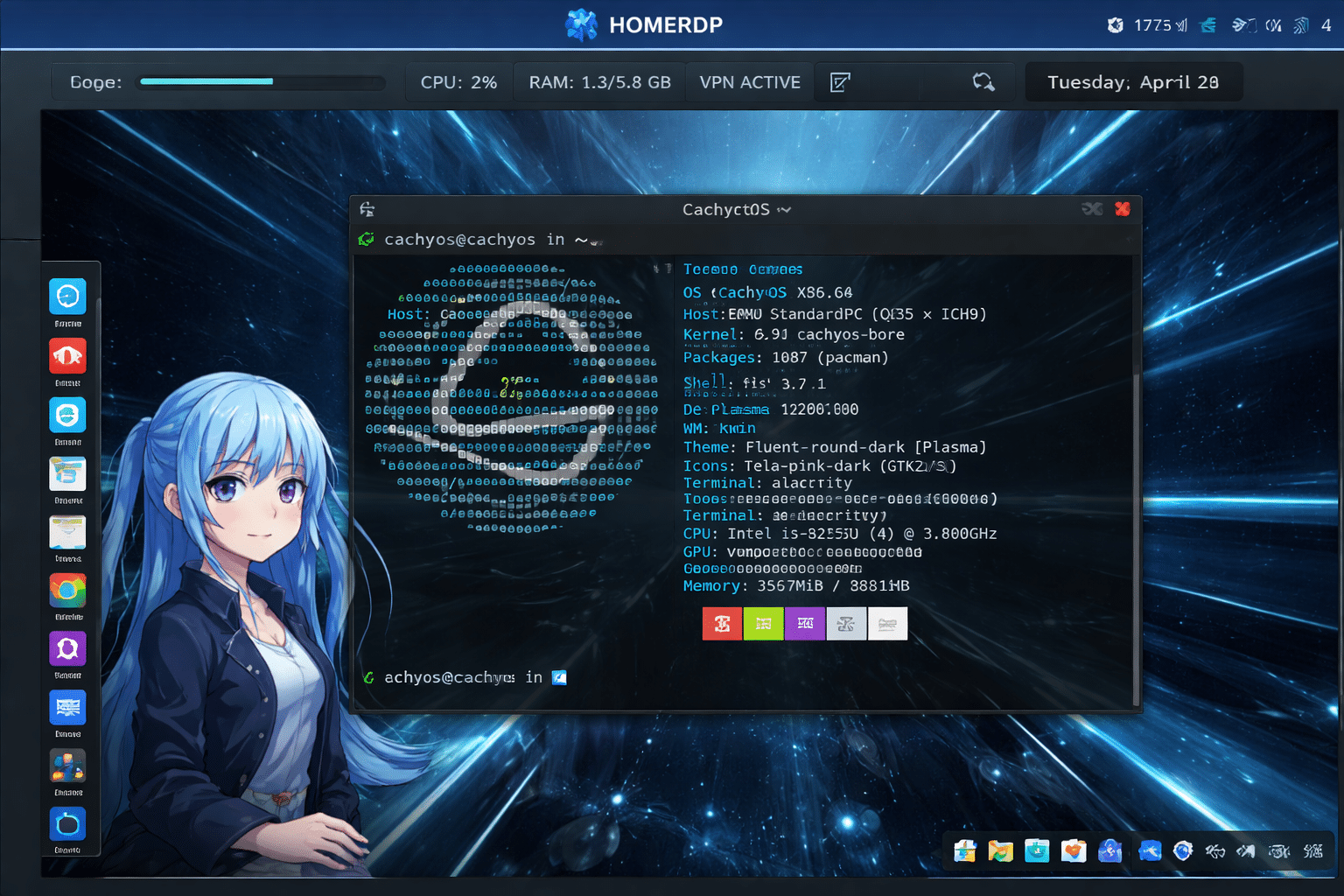
CachyOS shines in:
- Remote performance testing
- High-FPS Linux desktop sessions
- Continuous compilation workloads
- Benchmarking kernels and schedulers
Its performance-oriented design pairs naturally with HOMERDP’s SSD-backed Linux VPS infrastructure, delivering workstation-class responsiveness in the cloud.
EndeavourOS on HOMERDP
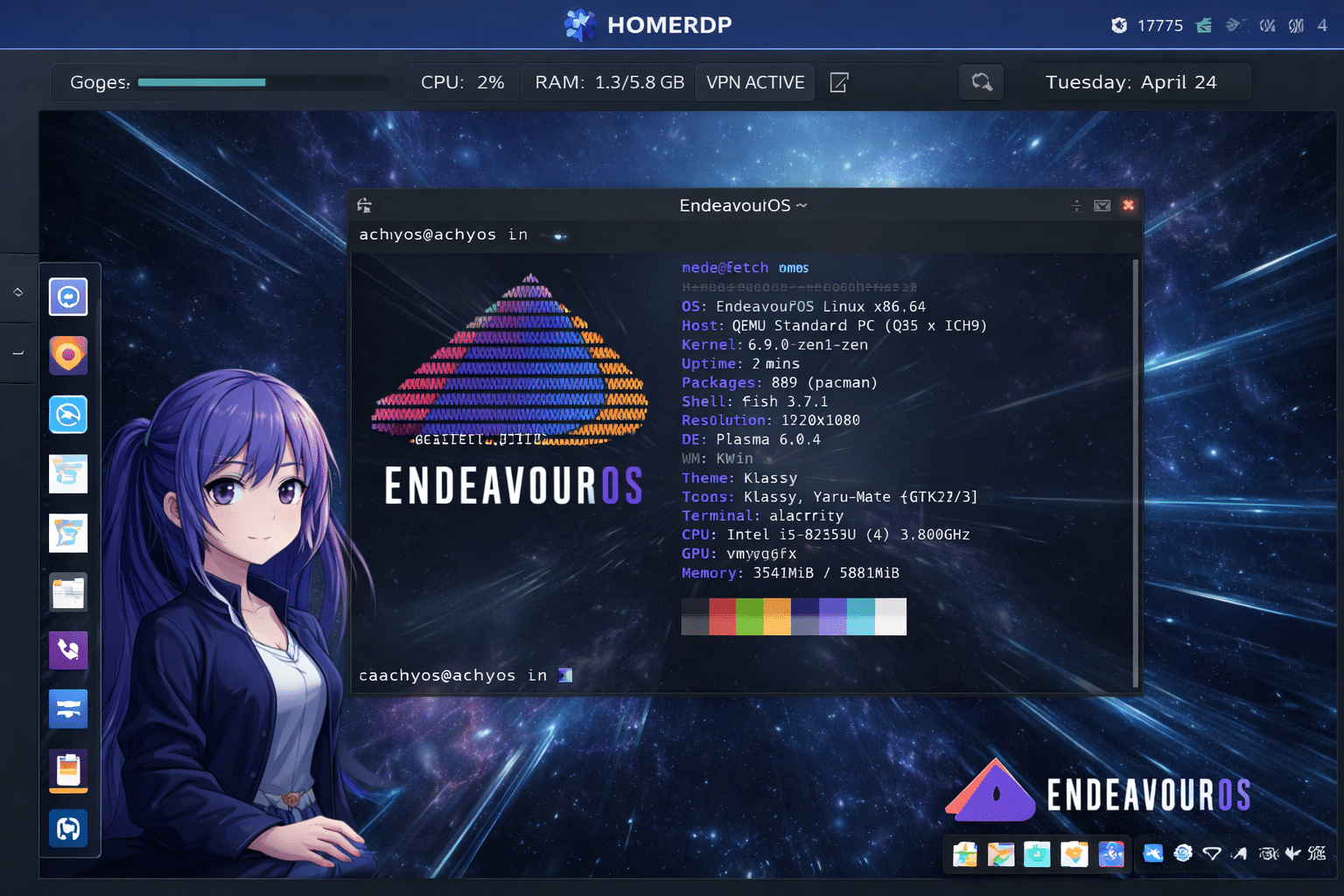
EndeavourOS excels in:
- Clean development environments
- CI/CD runners
- Training and learning Arch Linux
- Stable remote coding setups
Its simplicity and upstream alignment make it ideal for long-running VPS workloads on HOMERDP Linux servers.
Security and Maintenance
Both distros benefit from:
- Arch Linux’s rapid security patching
- Rolling updates with the latest kernels and libraries
EndeavourOS minimizes surprises by avoiding aggressive changes. CachyOS balances performance gains with careful testing, making it surprisingly reliable despite its optimizations.
For cloud deployments, both integrate cleanly with:
- SSH hardening
- Firewall rules
- Snapshot-based backup strategies supported by VPS platforms like HOMERDP
Performance vs Control: Which Should You Choose?
Choose CachyOS if you:
- Want maximum performance without manual tuning
- Use modern CPUs and SSD-based storage
- Run Linux desktops over RDP
- Benchmark, game, or compile heavily
Choose EndeavourOS if you:
- Prefer a clean, Arch-aligned system
- Want predictable updates
- Enjoy manual optimization
- Maintain multiple stable development environments
Final Verdict
CachyOS and EndeavourOS represent two valid interpretations of Arch Linux’s philosophy. One prioritizes speed and optimization, the other champions clarity and control.
When paired with HOMERDP’s Linux VPS and RDP solutions, both distros unlock powerful remote workflows that rival local machines. CachyOS turns cloud servers into high-performance Linux workstations, while EndeavourOS offers a clean and reliable Arch foundation for professional development.
In 2026, the right choice doesn’t depend on which distro is “better”—it depends on how you work, what you optimize for, and where you deploy your Linux environment.
EXPLORE MORE ; FreeBSD NomadBSD Tested: USB OS Performance with HOMERDP

READ OUR BLOGS